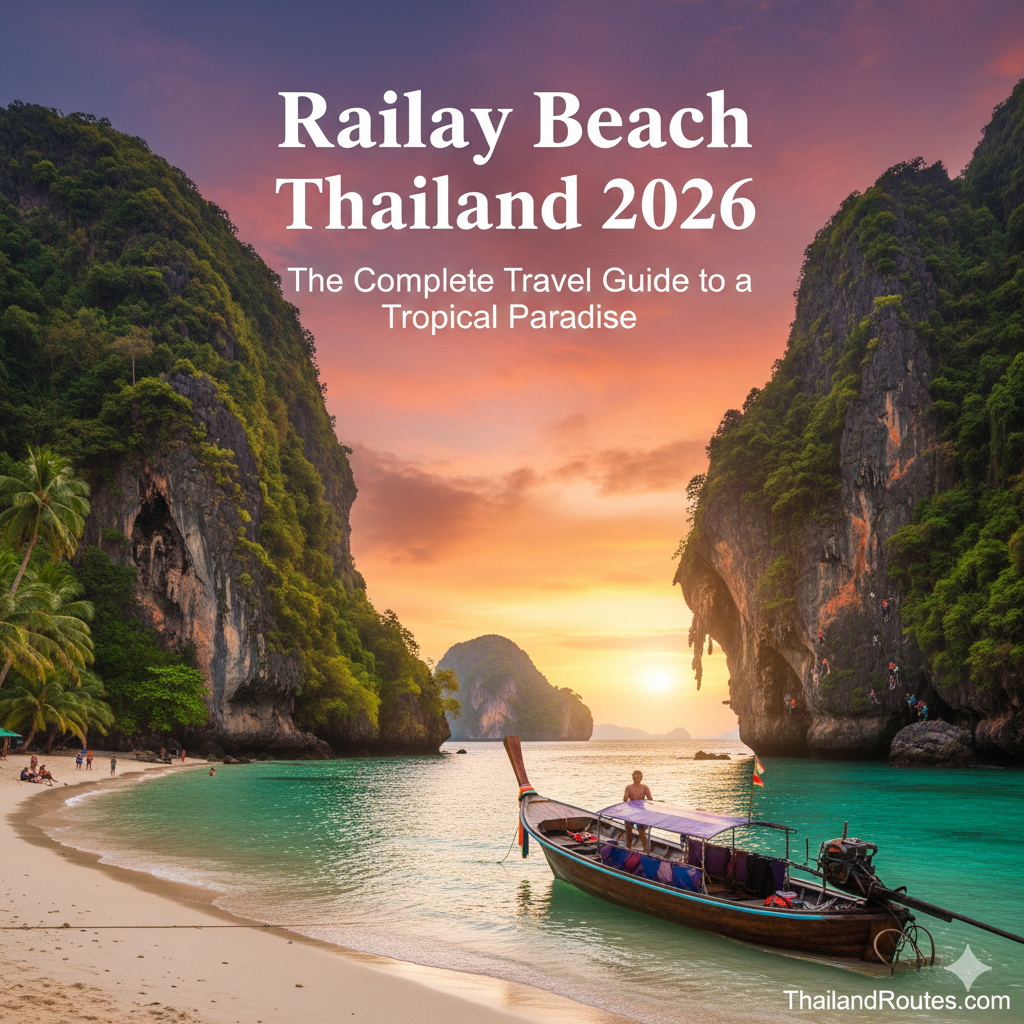
Located on the shores of Krabi in southern Thailand, Railay Beach might look like a classic tropical beach at first glance. Turquoise waters, powdery white sand, palm trees… But what makes Railay truly special is far more than just the scenery. It is a small peninsula surrounded by towering limestone cliffs, inaccessible by road, with a world of its own. It is, quite literally, an isolated stage of nature.
The moment you step onto Railay Beach, you realize this isn’t just a place to rest it’s a place to explore. Every path leads to a new view, and every bay offers a different atmosphere. Let’s dive into the details to truly understand Railay.
Where is Railay Beach and Why is it So Special?
Railay is situated in the Krabi region, between Ao Nang and Krabi Town. However, there is a catch: there are no roads leading here. Due to the massive limestone cliffs encircling it, access is only possible by sea. This isolation has both protected Railay and given it an “island feel” despite the tourist crowds.
This geographical seclusion has allowed Railay’s nature to remain relatively preserved. The high cliffs don’t just offer a visual spectacle; they also make Railay one of the world’s premier rock-climbing hubs.
How to Get to Railay Beach?
Access to Railay is primarily provided by longtail boats departing from Ao Nang. The journey takes about 10–15 minutes. Boats from Krabi Town take a bit longer.
While boats run frequently during the day, trips decrease at night. Therefore, day-trippers should plan their return carefully. Sea conditions, especially during the rainy season, can affect transportation. The sight of the beach appearing between the cliffs as you approach by boat is one of the most unforgettable moments of the journey.
The Sections of Railay Beach
Railay is not just one beach; it consists of four main areas, each with a distinct character:
- Railay West: The most popular and photogenic part. It stands out with its wide sandy beach, calm waters suitable for swimming, and stunning sunset views. Most upscale hotels are located on this side.
- Railay East: Not suitable for swimming because the water recedes during low tide, revealing a muddy floor. However, this is where most restaurants, bars, and budget-friendly accommodation options are concentrated. It is the functional heart of the peninsula.
- Phra Nang Beach: Arguably the most impressive beach in Railay. With its crystal-clear water and dramatic cliff backdrop, it is often cited as one of Thailand’s most beautiful beaches. It is also home to the famous Princess Cave, filled with offerings dedicated to sea spirits.
- Tonsai Beach: A more alternative and quieter area. Rock climbers and backpackers prefer staying here for its bohemian and laid-back vibe.
Activities to Do in Railay
Railay is more than just a beach; it offers rich options for an active holiday:
- Rock Climbing: As one of the best climbing destinations in the world, the limestone cliffs offer hundreds of routes for all levels. There are daily courses for beginners and technical routes for the experienced.
- Railay Viewpoint and Lagoon: A short but steep hike from the path between East and West leads to the Viewpoint, offering a bird’s-eye view of the entire peninsula. Further down is a hidden lagoon, but the descent is muddy and slippery; extreme caution is advised.
- Kayaking and Paddle Boarding: Renting a kayak at Phra Nang or Railay West is one of the best ways to explore the cliffs and reach small, hidden coves from the sea.
- Island Hopping: Day trips to the Hong Islands, Chicken Island, and other nearby spots depart from Railay, offering ideal stops for snorkeling.
Accommodation in Railay
Railay offers accommodation for every budget, from luxury resorts to wooden bungalows.
- Railay West: High-end, comfortable hotels close to the beach.
- Railay East: More economical and social options.
- Tonsai: Guesthouses suitable for backpackers.
- Early booking is essential during the peak season (November–March).
When to Go?
- November – March: The ideal period. The weather is dry, and the sea is calm.
- April – May: Temperatures and humidity rise.
- May – October: The rainy season. The sea can be choppy, but crowds are thinner.
Dining and Nightlife
Railay offers a small but delicious culinary scene. Seafood is incredibly fresh. Thai classics like Pad Thai, Tom Yum soup, and Mango Sticky Rice are available in almost every restaurant. Railay East is richer in restaurant variety, while Railay West is perfect for a sunset dinner. Nightlife is chilled; think beachfront bars with live music rather than big clubs.
Things to Know Before You Go
- ATMs are limited; it’s wise to carry some cash.
- The sun is intense; high-factor sunscreen is a must.
- Tide times can affect your swimming plans.
- Monkeys are common in some areas; do not leave your food unattended.
- Wear non-slip shoes for the Viewpoint hike.
How Many Days Should You Plan?
To truly feel the vibe of Railay, 2–3 days are ideal. One day for the beach, one for activities, and one for an island tour is usually sufficient.
Frequently Asked Questions (FAQ)
1. Can you reach Railay Beach by land? No. Railay is only accessible by boat.
2. Is Railay Beach expensive? It is slightly more expensive than Ao Nang, but there are accommodation options for different budgets.
3. Is it safe to swim in Railay? Yes, Railay West and Phra Nang are safe for swimming, but always check the tide and weather conditions.
4. How many days are enough for Railay? 2–3 days are perfect to experience everything it has to offer.
5. Is Railay suitable for a holiday with children? Yes. Railay West is family-friendly, though hikes like the Viewpoint may be difficult for young children.
Railay Beach is one of Thailand’s most spectacular natural stages. Here, time slows down. You can swim in the morning, climb cliffs in the afternoon, and immerse yourself in tropical silence while watching the sunset. It’s not just a beach; it’s a living space within nature. Those who visit usually leave with one sentence: “One day was not enough.”
Leave a Reply