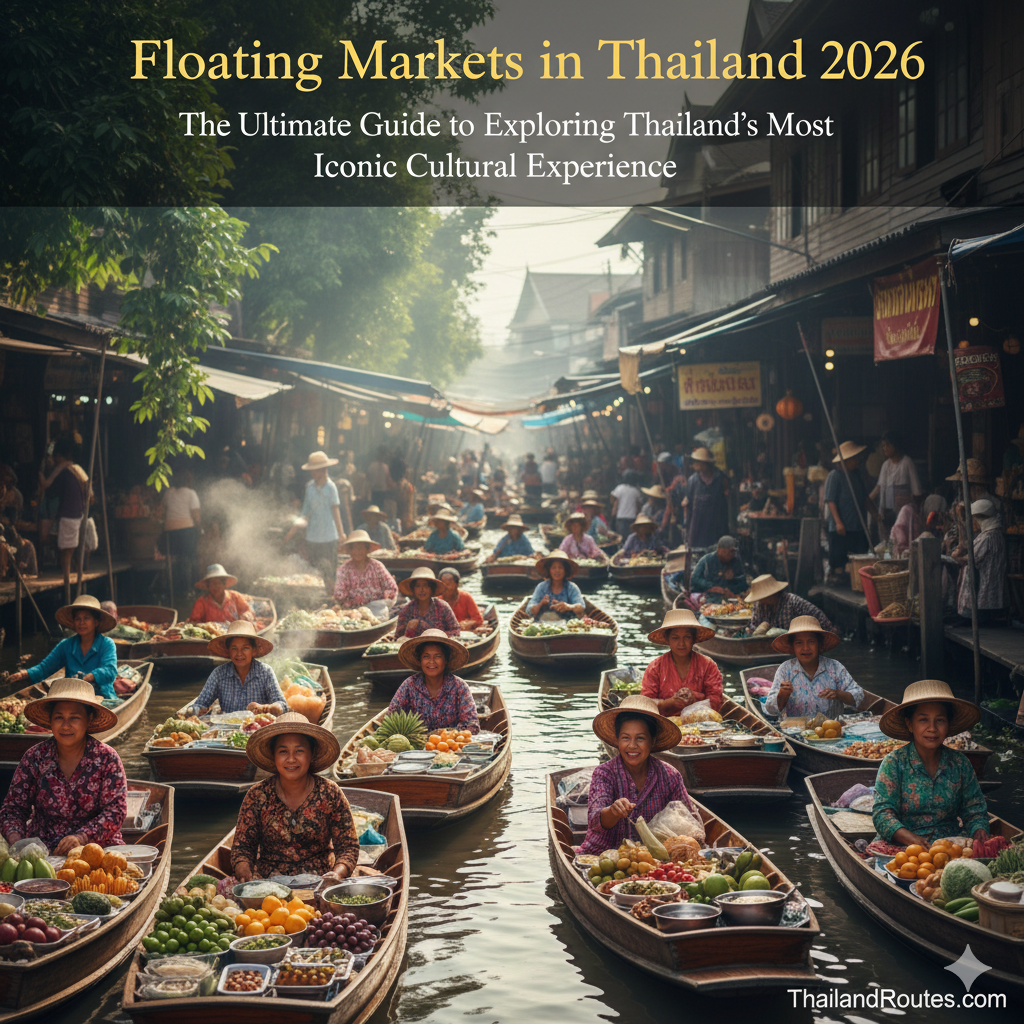
No trip to Thailand is complete without experiencing a floating market. Known locally as talad nam, these bustling river markets have been a part of Thai life for centuries. Once the lifeblood of riverside communities, floating markets have evolved into vibrant cultural hubs where tradition, commerce, and local cuisine come together.
By 2026, Thailand’s floating markets remain among the most popular attractions for travelers. They offer a glimpse into a way of life that predates the modern highway system—a world where boats serve as floating kitchens, merchants in wide-brimmed hats sell tropical fruits, and the scent of sizzling street food fills the air.
This comprehensive guide covers everything you need to know about visiting Thailand’s floating markets in 2026: their history, best locations, local food, travel tips, and how to experience them responsibly.
A Brief History of Thailand’s Floating Markets
Before modern infrastructure, canals (called khlongs) were Thailand’s primary transportation and trade routes. Floating markets emerged naturally along these waterways, especially around Bangkok and central Thailand.
For centuries:
- Villagers traded fruits, vegetables, rice, and fish directly from their boats.
- Families lived in wooden houses along the canals.
- The markets served as both commercial and social hubs.
As roads and supermarkets developed, many of these traditional markets declined. But instead of disappearing, some transformed into cultural landmarks, preserving Thailand’s heritage while welcoming travelers from around the world.
Best Floating Markets in Thailand 2026
1. Damnoen Saduak Floating Market – The Iconic Experience
Located about 100 kilometers southwest of Bangkok, Damnoen Saduak is Thailand’s most famous floating market. Established in the 19th century during the reign of Rama IV of Siam, it remains a vibrant, colorful spectacle.
Highlights:
- Dozens of wooden boats selling fruits, Thai desserts, and souvenirs.
- Photogenic scenes of traditional river commerce.
- Early morning boat tours for fewer crowds.
Best time to visit: 6:00–9:00 AM
Entrance fee: Free (boat ride costs around 300–600 THB depending on duration)
Why go in 2026: Improved crowd management and cleaner canal systems thanks to government eco-initiatives.
2. Amphawa Floating Market
Just 90 kilometers from Bangkok, Amphawa is less touristy than Damnoen Saduak and loved for its authentic local vibe. It operates mainly in the late afternoon and evening, offering a more relaxed atmosphere.
Highlights:
- Evening boat rides with a view of fireflies dancing in the trees.
- Traditional wooden shop-houses along the canal.
- Affordable local seafood and sweets.
Best time to visit: 4:00–8:00 PM (Friday to Sunday)
Entrance fee: Free (optional boat tours around 50–100 THB)
Why go in 2026: Enhanced pedestrian zones and more eco-conscious waste management programs.
3. Taling Chan Floating Market
Taling Chan is one of the easiest floating markets to visit from central Bangkok. Smaller and more authentic than the big tourist spots, it’s ideal for travelers short on time.
Highlights:
- Fresh grilled seafood and local street food.
- Live music and family-friendly vibe.
- Less crowded than Damnoen Saduak.
Best time to visit: Weekends, 8:00 AM – 4:00 PM
Entrance fee: Free
Why go in 2026: Increased accessibility through improved BTS and river taxi connections.
4. Bang Nam Phueng Floating Market
Located in Phra Pradaeng District, Bang Nam Phueng is a semi-floating weekend market surrounded by greenery and quiet canals.
Highlights:
- Unique handicrafts and organic produce.
- Friendly vendors and fewer tourists.
- Easy to combine with cycling tours of the area.
Best time to visit: Weekends, 8:00 AM – 3:00 PM
Entrance fee: Free
Why go in 2026: A model for sustainable tourism and low-impact travel.
5. **Khlong Lat Mayom Floating Market – Food Lover’s Paradise
This market combines floating boat vendors with stalls on land. It’s famous for its food, attracting both locals and visitors seeking an authentic culinary experience.
Highlights:
- Traditional Thai dishes at low prices.
- Boat rides through peaceful canals.
- Perfect for a half-day trip from Bangkok.
Best time to visit: Weekends, 9:00 AM – 3:00 PM
Entrance fee: Free
Why go in 2026: Known for its commitment to keeping tourism sustainable and authentic.
What to Eat at Floating Markets
One of the best parts of visiting a floating market is the food. Vendors cook fresh meals right on their boats, passing dishes directly to customers on the pier or other boats.
Must-try dishes:
- Pad Thai: Classic stir-fried noodles with shrimp or chicken.
- Boat noodles (kuaitiao ruea): Rich, aromatic noodle soup traditionally served from boats.
- Grilled river prawns and squid.
- Mango sticky rice (khao niew mamuang).
- Coconut ice cream served in coconut shells.
- Thai iced coffee and fresh sugarcane juice.
Prices are typically lower than in city restaurants, and the atmosphere is unlike anywhere else in the world.
What to Buy at Floating Markets
Floating markets are also fantastic places for shopping local. In 2026, many vendors focus on handmade and eco-friendly products.
Popular items include:
- Thai spices and sauces.
- Handcrafted souvenirs and home decor.
- Woven bags and hats.
- Traditional herbal products.
- Fresh tropical fruits (mango, rambutan, mangosteen).
- Locally made sweets and snacks.
Many markets have reduced plastic packaging in favor of banana leaves and reusable containers, reflecting Thailand’s growing eco-tourism movement.
How to Get to Thailand’s Floating Markets
From Bangkok:
- Damnoen Saduak / Amphawa: Minivan or taxi (1.5–2 hours). Many hotels offer half-day tours.
- Taling Chan / Khlong Lat Mayom / Bang Nam Phueng: Easily accessible by taxi, BTS Skytrain + river taxi, or Grab.
From Hua Hin or Ayutthaya:
- Private car or minivan transfers are common.
For a more authentic experience, some travelers opt for boat rides from Bangkok along the old canals.
Floating Market Tours in 2026
Many travelers join guided tours to make the most of their floating market visits. Common options include:
| Tour Type | Duration | Cost (THB) | Highlights |
|---|---|---|---|
| Half-day Bangkok floating tour | 4–5 hours | 600–1,200 THB | Taling Chan or Khlong Lat Mayom + boat ride |
| Damnoen Saduak & Amphawa combo | 1 day | 1,200–2,000 THB | Visit two major markets with guide and transfers |
| Private longtail boat tour | 2–4 hours | 800–1,500 THB | Customizable route and flexible schedule |
| Cultural & food tour | Half or full day | 1,000–2,000 THB | Includes local food tastings and cultural explanations |
Many tours in 2026 now include eco-education components, teaching travelers about the canal ecosystem and responsible tourism.
Best Time to Visit Floating Markets
- Early Morning: Best for avoiding crowds and enjoying cooler temperatures. Vendors are most active, and the atmosphere feels more traditional.
- Late Afternoon (Amphawa): Ideal for a more local vibe, cooler weather, and firefly boat rides.
- Weekends: Most markets are fully operational and lively.
Thailand’s floating markets are busiest between November and April, during the cool, dry season. Rainy season (May–October) is less crowded but still enjoyable.
Tips for Visiting Floating Markets in 2026
- Bring cash: While some vendors accept QR payments, cash is still king in most floating markets.
- Negotiate politely: Bargaining is part of the fun, but keep it friendly.
- Arrive early: Crowds can grow quickly, especially at Damnoen Saduak.
- Wear lightweight clothing and a hat: Many markets are outdoors.
- Try the food from the boats: It’s part of the authentic experience.
- Use eco-friendly products: Bring your own water bottle, avoid plastic bags.
- Respect local culture: Dress modestly and avoid blocking narrow walkways.
Cultural Etiquette at Floating Markets
Floating markets aren’t just tourist attractions—they’re part of Thailand’s living cultural heritage. Showing respect goes a long way.
- Step carefully when boarding boats or piers.
- Keep your voice low; avoid loud or disruptive behavior.
- Always smile and greet vendors politely.
- Ask before taking close-up photos of people.
- Don’t litter in the water or along the banks.
This respect helps preserve the cultural atmosphere that makes these markets so special.
Floating Markets Beyond Bangkok
While most famous floating markets are around Bangkok, several others across Thailand offer unique experiences:
- Khlong Hae Floating Market (Songkhla): Southern Thailand’s only floating market with Muslim and Thai vendors.
- Ayothaya Floating Market (Ayutthaya): A themed market with cultural performances.
- Pattaya Floating Market: A large, modern market blending tradition and tourism.
- Chiang Mai Floating Market (weekends only): A small, growing market that offers a northern twist.
These alternative markets are excellent for travelers who want to see different sides of Thai culture beyond the capital.
Sustainability and Eco-Tourism in 2026
Thailand has taken significant steps to preserve its canal ecosystems and promote sustainable floating market tourism.
- Many markets now limit plastic use.
- Vendors are encouraged to use biodegradable packaging.
- Tourist caps at peak times help prevent overcrowding.
- Revenue from tourism supports canal cleaning and restoration projects.
Travelers can support these efforts by choosing eco-certified tours, minimizing waste, and respecting local customs.
Floating Market Prices 2026
| Item | Average Price (THB) |
|---|---|
| Boat noodles / Pad Thai | 50–100 THB |
| Fresh coconut | 30–50 THB |
| Souvenirs / Handicrafts | 100–500 THB |
| Boat ride (shared) | 50–100 THB |
| Boat ride (private) | 300–600 THB |
| Mango sticky rice | 50–80 THB |
Prices may vary depending on location and bargaining skills.
Frequently Asked Questions
Q: Are floating markets open every day?
A: Some are daily (e.g., Damnoen Saduak), but many operate only on weekends (e.g., Amphawa, Taling Chan).
Q: What time should I go?
A: Early morning is best for most markets; late afternoon for Amphawa.
Q: Do I need to book a tour?
A: Not always. Independent travel is easy for nearby markets, but tours help for day trips.
Q: Are floating markets expensive?
A: No. They’re affordable, and prices are often lower than city restaurants.
Q: Is it suitable for families?
A: Yes. Most markets are family-friendly, with food, shopping, and cultural activities.
Suggested Floating Market Itinerary
Day 1:
- Early morning: Visit Taling Chan Market (ideal for short visits).
- Lunch: Enjoy grilled seafood and coconut desserts.
- Afternoon: Explore nearby Bangkok temples or take a river taxi.
Day 2:
- Morning: Travel to Damnoen Saduak Floating Market.
- Midday: Private boat tour through the canals.
- Afternoon: Head to Amphawa Floating Market for evening fireflies.
- Evening: Return to Bangkok.
This 2-day itinerary combines the most famous markets with local favorites, offering both iconic experiences and authentic encounters.
Conclusion: Floating Markets — Where Culture and Commerce Flow
Floating markets in Thailand are more than just attractions—they are living testaments to the country’s history, culture, and relationship with water. By 2026, these markets have embraced sustainable tourism while keeping their vibrant character intact.
Whether you’re slurping noodles from a passing boat at Taling Chan, watching the fireflies glow at Amphawa, or taking postcard-perfect photos at Damnoen Saduak, a floating market visit is a must-do experience for every traveler to Thailand.
Leave a Reply