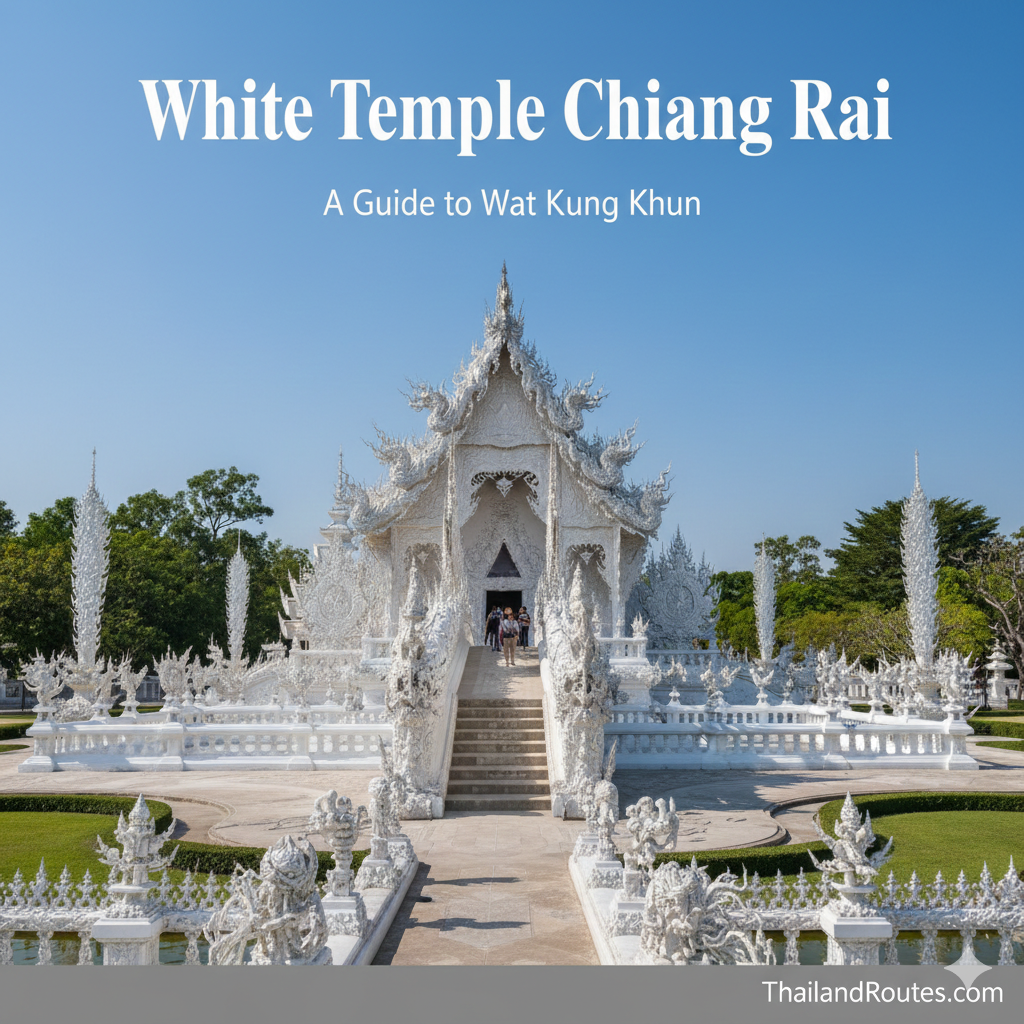
In the quiet province of Chiang Rai, far from the urban bustle of Bangkok, stands one of Thailand’s most stunning and unconventional landmarks: Wat Rong Khun — better known as the White Temple.
More than just a place of worship, the White Temple is a surreal work of contemporary art and spiritual symbolism. Built in dazzling white and covered with mirror mosaics, it looks like something out of a dream—a temple suspended between heaven and earth.
By 2026, the White Temple continues to draw millions of visitors each year, enchanting travelers with its striking architecture, intricate details, and deep cultural meaning. This comprehensive guide covers everything you need to know about visiting this iconic site: history, meaning, opening hours, entrance fees, how to get there, dress code, and practical tips for your journey.
A Brief History of Wat Rong Khun
Wat Rong Khun was designed, built, and funded by renowned Thai visual artist Chalermchai Kositpipat. Construction began in 1997 as part of his life’s mission: to create a temple that would blend traditional Buddhist symbolism with modern artistic expression.
Key milestones in its history:
- 1997: Construction of the temple begins, entirely financed by Chalermchai himself.
- 2000: First sections of the main ubosot (ordination hall) open to visitors.
- 2014: A minor earthquake damages the structure but restoration begins almost immediately.
- 2026: The temple continues to expand, with new art galleries, meditation areas, and symbolic installations being added.
Unlike traditional temples, Wat Rong Khun isn’t just a place of worship. It’s also a living artwork that evolves over time, reflecting both Buddhist teachings and the modern world.
Symbolism and Meaning Behind the White Temple
Wat Rong Khun isn’t simply painted white by chance. Every element carries symbolic weight:
- White Color: Represents purity and the Buddha’s teachings.
- Mirror Mosaic: Reflects light, symbolizing the wisdom of the Buddha spreading across the world.
- Bridge of “the Cycle of Rebirth”: The entrance bridge represents the path from the cycle of desire and temptation to enlightenment.
- Hands of Suffering: Hundreds of outreaching hands beneath the bridge symbolize human greed and desire.
- Main Temple: Represents Nirvana, the ultimate goal in Buddhism.
Chalermchai intentionally infused modern references—superheroes, movie characters, and pop culture—into murals inside the temple to show the conflict between good and evil in the modern era. This unexpected fusion is what sets Wat Rong Khun apart from traditional Thai temples.
Location of the White Temple
- Address: Pa O Don Chai, Mueang Chiang Rai District, Chiang Rai 57000, Thailand
- Distance from Chiang Rai City Center: Approximately 13 km (20 minutes by car)
- Distance from Chiang Rai International Airport: Around 25 minutes
Its strategic location makes it easy to include in most Chiang Rai itineraries.
Opening Hours in 2026
- Monday – Sunday: 8:00 AM – 5:30 PM
- Last Entry: 5:00 PM
- Best Time to Visit: Early morning (8:00–10:00 AM) or late afternoon (3:00–5:00 PM) to avoid crowds and harsh sunlight.
During peak season (December to March), arriving early is recommended to enjoy the site peacefully.
Entrance Fees (2026)
| Ticket Type | Price (THB) | Notes |
|---|---|---|
| Adults (International Visitors) | 100 THB | Includes access to the temple and grounds |
| Children | Free | Under 12 years old |
| Thai Citizens | Free | Local visitors are not charged |
| Guided Tour (Optional) | 200 THB | English-language guided tours available at scheduled times |
Tickets can be purchased at the entrance or online through the official website. Cashless payment is widely accepted.
Dress Code and Visitor Etiquette
Wat Rong Khun is both a temple and an art installation, but it remains a sacred site. Visitors are required to dress modestly:
- Shoulders and knees must be covered.
- No transparent or tight clothing.
- Remove hats and sunglasses inside the ubosot.
- Shoes must be removed before entering temple buildings.
If your outfit doesn’t meet the dress code, sarongs and cover-ups can be rented near the entrance.
Other etiquette rules:
- Speak softly.
- No touching of murals or sculptures.
- No photography inside the main ordination hall (ubosot).
- Respect monks and temple staff.
Exploring the White Temple: Key Highlights
1. The Bridge of the Cycle of Rebirth
Visitors enter by crossing a narrow white bridge flanked by hundreds of outstretched hands. These symbolize human suffering, greed, and the earthly temptations that must be overcome to reach enlightenment.
2. The Gate of Heaven
After the bridge, visitors pass two guardian statues representing Death and Rahu, keepers of human fate.
3. The Ubosot (Main Hall)
This is the spiritual center of the temple. Its gleaming white exterior contrasts with its unexpected interior murals, which mix Buddhist imagery with modern pop culture icons like superheroes, spaceships, and movie characters. This symbolizes the coexistence of good and evil in the modern world.
4. The Golden Building
Located behind the temple, this richly decorated golden structure is not part of the sacred complex. It symbolizes materialism and worldly desires, offering a visual contrast to the purity of the white ubosot.
5. Sculptures and Details
Around the temple grounds, visitors find:
- Mythical creatures from Buddhist and Hindu lore.
- Contemporary art installations.
- A mirror pond that perfectly reflects the temple’s structure.
- Small shrines and sculptures that symbolize moral teachings.
6. The Art Gallery
Adjacent to the temple, Chalermchai’s art gallery showcases his original paintings and sketches, providing insight into his vision for Wat Rong Khun.
The Artist Behind the Temple: Chalermchai Kositpipat
Chalermchai Kositpipat is one of Thailand’s most famous contemporary artists. Born in Chiang Rai, he dedicated his life and personal fortune to building Wat Rong Khun as a gift to the Thai people and Buddhism.
Chalermchai refuses government funding to ensure the temple remains independent and true to his vision. His goal is for Wat Rong Khun to stand as a center of spiritual inspiration and national pride for generations to come.
He once said: “I want this temple to become a masterpiece of Buddhist art, something that the world will remember Thailand for.”
How to Get to the White Temple
By Car or Taxi
The fastest and most convenient option from Chiang Rai city center. Travel time: 20 minutes. Cost: around 200–300 THB one way.
By Songthaew (Shared Pickup Truck)
Budget-friendly local option. Available from Chiang Rai Bus Terminal 1. Cost: 30–50 THB per person.
By Tour Package
Many day tours from Chiang Mai or Chiang Rai include the White Temple as a main stop. Ideal for travelers with limited time.
By Scooter or Bike
Independent travelers often rent scooters in Chiang Rai. Roads are well maintained, and parking is available near the entrance.
Best Times to Visit
- Early Morning (8:00–10:00 AM): Cool weather, fewer tourists, perfect lighting for photography.
- Late Afternoon (3:00–5:00 PM): Warm golden light enhances the mirror mosaics.
- Avoid Midday: Peak sun and crowd levels can make the visit less enjoyable.
The temple is busiest during weekends and Thai holidays.
Practical Travel Tips for 2026
- Wear comfortable shoes: You’ll do a fair amount of walking around the grounds.
- Bring sunscreen and water: Chiang Rai can get hot, especially midday.
- Respect the rules: Photography inside the ubosot is strictly forbidden.
- Be mindful: Wat Rong Khun is a spiritual site, not just an Instagram hotspot.
- Allocate time: Plan at least 1.5 to 2 hours for a full visit.
Additional Attractions Near the White Temple
Chiang Rai is home to several other cultural and natural attractions that pair well with a visit to Wat Rong Khun:
- Baan Dam Museum (Black House): A dark and fascinating artistic counterpoint to the White Temple.
- Wat Rong Suea Ten (Blue Temple): Known for its stunning indigo interior and modern design.
- Singha Park: A scenic park with gardens, cafes, and zipline adventures.
- Golden Triangle: A famous historical region where Thailand meets Laos and Myanmar.
Many visitors explore these landmarks on a single day tour.
The White Temple in 2026: Continued Growth and Preservation
Wat Rong Khun is an ongoing project. Even after decades of work, the temple is not “finished” — new sections are continuously being added. By 2026:
- The meditation hall is near completion.
- A new museum wing has opened, showcasing Thai Buddhist art.
- Sustainability initiatives have been introduced, including solar power and eco-friendly ticketing.
- Visitor management systems help control crowds and preserve the site’s integrity.
Chalermchai has ensured the temple’s legacy will continue beyond his lifetime, with a trust established to maintain and expand the complex.
Spiritual Experience Beyond Architecture
Though known for its striking appearance, the White Temple is more than a photogenic landmark. It’s a spiritual journey. From the hands of suffering at the entrance to the serene Buddha statue at the center, visitors are guided through a symbolic passage from desire to enlightenment.
Many visitors describe feeling a sense of peace, reflection, or even awe as they move through the temple grounds. This blend of emotion, philosophy, and artistic brilliance is what makes Wat Rong Khun truly unique.
Photography Tips (Without Breaking the Rules)
- The best exterior shots are from across the pond facing the temple.
- Morning light gives a crisp white glow, while sunset adds golden tones.
- Wide-angle lenses capture the temple and its reflection in the pond.
- Tripods are not allowed inside, but handheld cameras are fine outside.
- No interior photography—respect this rule to protect the artwork.
Accessibility and Facilities
Wat Rong Khun has made improvements for accessibility in 2026:
- Ramps and smooth pathways for wheelchairs and strollers.
- Clean restrooms on-site.
- Café and souvenir shop near the entrance.
- Secure parking and a small visitors’ center with multilingual information.
Frequently Asked Questions
Q: How much time should I spend at the White Temple?
A: 1.5 to 2 hours is usually enough to explore the temple and grounds.
Q: Can I go inside the temple building?
A: Yes, visitors can enter the main hall, but shoes must be removed, and no photography is allowed.
Q: Is the White Temple an active religious site?
A: Yes. Although it’s also an art installation, it functions as a Buddhist temple.
Q: Are guided tours worth it?
A: Yes, they provide context and deeper insight into the symbolism and history of the temple.
Q: Is the temple open year-round?
A: Yes, except during rare maintenance or national religious ceremonies.
Responsible Travel Tips
- Support the temple by purchasing tickets directly.
- Be respectful of the cultural and religious context.
- Do not climb or lean on sculptures.
- Avoid loud conversations and inappropriate behavior.
- Use eco-friendly transportation where possible.
In 2026, the temple has become more vigilant about preserving its spiritual atmosphere despite its popularity with tourists.
Suggested Itinerary: Half-Day in Chiang Rai
Morning:
- Arrive early at Wat Rong Khun (8:00 AM).
- Explore the bridge, ubosot, gardens, and art gallery.
- Enjoy a coffee at the on-site café.
Midday:
- Visit Wat Rong Suea Ten (Blue Temple) and Baan Dam Museum.
- Lunch at a local restaurant in Chiang Rai.
Afternoon:
- Visit Singha Park or Golden Triangle for scenic views.
- Return to Chiang Rai city center.
This itinerary provides a balanced cultural and scenic experience.
Conclusion: Wat Rong Khun — Where Art Meets Enlightenment
The White Temple is more than a tourist destination. It’s a symbol of Thailand’s ability to honor tradition while embracing modern creativity. By blending spiritual symbolism, contemporary art, and social commentary, Chalermchai has created a masterpiece unlike any other temple in the world.
In 2026, Wat Rong Khun stands as a beacon of cultural pride, spiritual reflection, and artistic innovation. Whether you visit for its architectural brilliance, symbolic depth, or quiet beauty, this temple leaves a lasting impression on everyone who walks across its bridge.
Leave a Reply