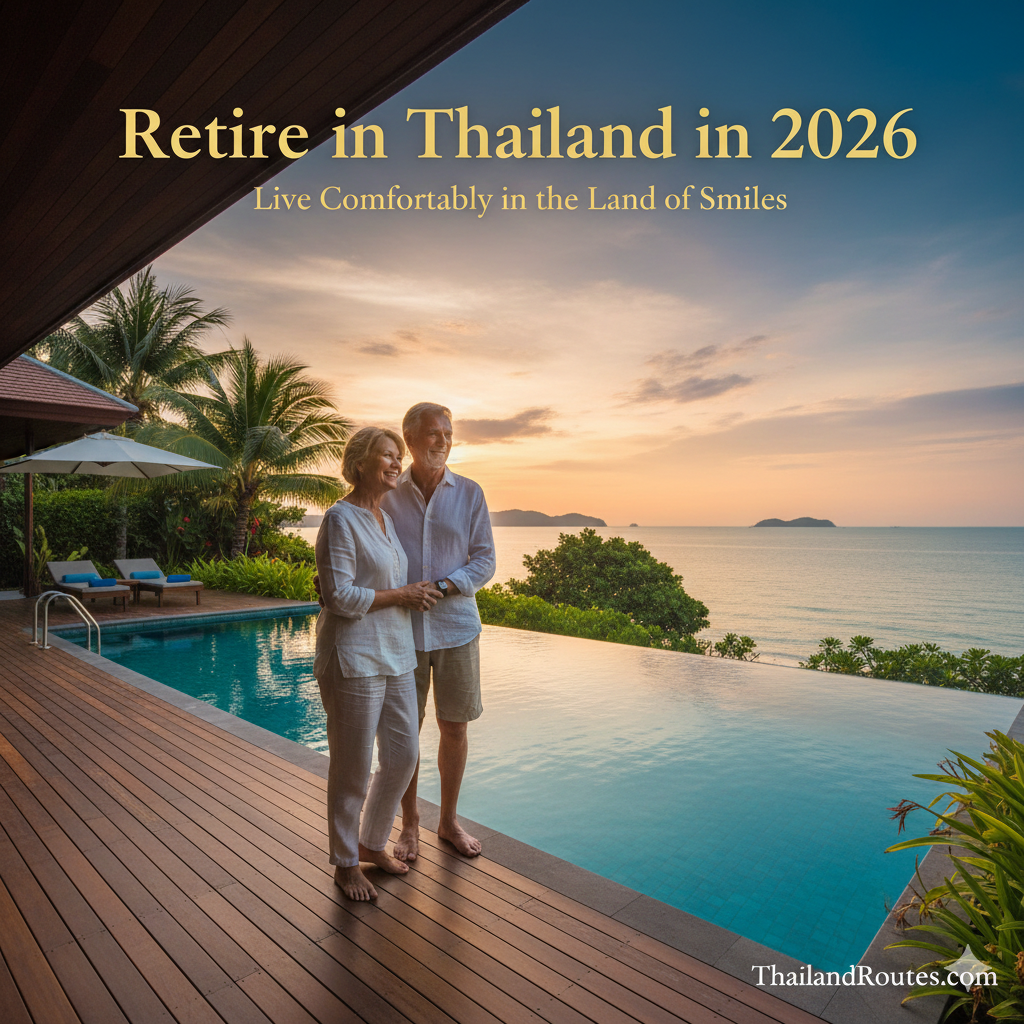
If you are considering settling in Thailand for retirement, this article offers practical information, real-life questions I have encountered, and a clear step-by-step overview. The content is detailed yet simple, covering official requirements, cost of living, healthcare, housing, taxation, and daily life — all explained clearly and without unnecessary complexity.
Why Thailand? Clear and Direct Reasons
Thailand stands out among retirement destinations because of its climate, quality healthcare services, lifestyle diversity, and relatively affordable cost of living. Its strong transportation network, international flight connections, and modern hospitals in major cities make it particularly comfortable for foreigners.
Which Visa Is Required for Retirement?
The most common pathway is the “retirement visa.” There are several main options:
- Non-Immigrant O-A / O (Retirement Visa): Generally available for individuals aged 50 and over. Applicants must prove a specific level of monthly income or bank deposit. Requirements may change, so it is important to check the most recent conditions via official Thai consulate sources.
- Non-Immigrant O-X (Long-Stay, 5–10 Years): Available to certain nationalities, allowing long-term stays of up to 10 years. This option requires significantly higher financial proof and is more suitable for retirees with larger savings.
Depending on the visa type, required documents include proof of income, bank statements, and health insurance coverage. Always confirm updated requirements before applying.
Cost of Living Differences by City and Region
Living costs in Thailand vary significantly depending on location:
- Bangkok: The capital city offers modern infrastructure and international hospitals, but rent and daily costs are the highest in the country.
- Chiang Mai: Located in the north, this city is quieter and more affordable. It is popular among retirees due to its balance between comfort and cost.
- Phuket and Coastal Areas: Beautiful but more expensive, especially during peak tourist season.
For a comfortable mid-range lifestyle, retirees generally budget between $800 and $2,000 USD per month, depending on personal standards and housing choices.
The key principle: the further you move away from central tourist zones, the lower your monthly expenses tend to be.
Healthcare and Health Insurance – What You Should Know
Thailand has both public and private healthcare facilities. In major cities such as Bangkok, Chiang Mai, and Phuket, private hospitals meet international standards.
Before relocating, obtaining comprehensive health insurance is essential. Some retirement visa types require proof of coverage.
- Private Insurance: International providers such as Cigna, Allianz, or AXA offer plans that cover both local and global healthcare.
- Medical Costs: Routine check-ups are often affordable, but major surgeries or long-term treatments at private hospitals can be expensive without insurance.
Choosing the right policy based on age and pre-existing conditions is critical.
Housing: Buying vs. Renting
- Property Ownership: Foreigners cannot directly own land in Thailand. However, they can legally purchase condominium units, subject to foreign ownership quotas (typically capped at 49% per building).
- Long-Term Lease Agreements: Another option is leasing land or property for extended periods.
- Renting: Flexible and practical. Long-term rental contracts often provide better pricing compared to short-term stays.
If considering property purchase, always verify title deeds (Chanote) and consult a legal professional to avoid future complications.
Banking, Pension Transfers, and Financial Planning
- Opening a Bank Account: Most Thai banks allow foreigners with long-term visas to open accounts. Some may require proof of residence.
- Pension Transfers: If transferring retirement income regularly, compare international transfer fees carefully.
- Tax Regulations: Thailand has updated tax rules in recent years, particularly regarding foreign income brought into the country. Residency status determines tax liability.
Consulting a tax advisor familiar with expatriate regulations is highly recommended.
Tax Responsibilities
Tax residency in Thailand depends on the number of days spent in the country annually and the origin of income.
In general:
- Long-term residents may be subject to Thai taxation on certain foreign income.
- Double taxation agreements between Thailand and your home country can affect how your pension is treated.
Since regulations change, professional advice ensures compliance and avoids surprises.
Daily Life – Food, Transportation, Language
- Food: Fresh markets offer affordable fruits, vegetables, seafood, and rice. Street food is inexpensive and widely available.
- Transportation: Major cities provide public transport systems (such as BTS and MRT in Bangkok). In smaller cities, taxis and ride-sharing apps are common.
- Language: English is sufficient in tourist areas, but learning basic Thai phrases makes everyday interactions easier and builds better relationships.
Thailand’s culture emphasizes respect and politeness, especially toward older individuals.
Safety and Practical Awareness
Thailand is generally safe for retirees. However:
- Be cautious of property scams or unrealistic financial offers.
- Always verify contracts before signing.
- Healthcare access in rural areas may be limited compared to major cities.
Practical awareness goes a long way in ensuring a smooth retirement experience.
Pre-Move Checklist
- Decide which visa type fits your situation and prepare financial documentation.
- Secure appropriate health insurance coverage.
- Consult a tax advisor regarding international income.
- Research housing options carefully.
- Establish a clear monthly budget plan.
Taking time to plan reduces stress after arrival.
Choosing the Right City
- Bangkok: Full services, hospitals, international lifestyle.
- Chiang Mai: Relaxed pace, affordable living, strong expat community.
- Phuket / Krabi: Coastal living, seasonal pricing fluctuations.
- Small Towns: Lower costs but fewer services.
Your choice should align with healthcare access, budget, and preferred lifestyle.
Frequently Asked Questions (FAQ)
1. How much money do I need for a Thai retirement visa?
Requirements vary by visa type. Standard retirement visas typically require proof of monthly income or a Thai bank deposit of 800,000 baht.
2. Is health insurance mandatory?
Certain long-term visas require approved health insurance coverage.
3. Can foreigners buy land in Thailand?
Direct land ownership is generally not permitted. Condo ownership is allowed under specific conditions.
4. Will I pay taxes in Thailand?
Tax obligations depend on residency status and income source. Consult a tax professional for clarity.
5. Can I live comfortably on a moderate pension?
Yes. Living costs can be relatively low, especially outside major tourist cities. Proper budgeting remains essential.
Leave a Reply