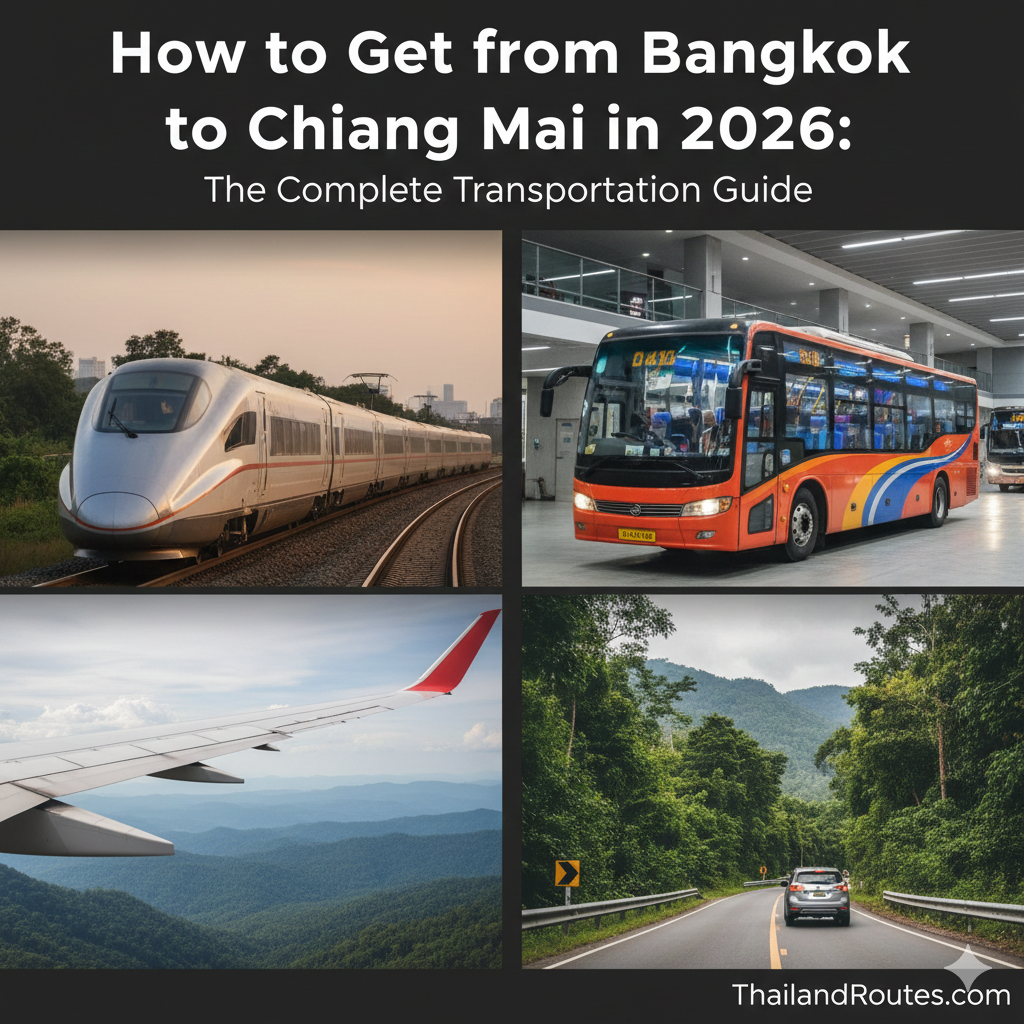
Journeying from the Capital to the Cultural North
Bangkok and Chiang Mai are two of the most popular destinations in Thailand. One is a vibrant, bustling metropolis known for its skyscrapers, shopping malls, and street food. The other is a serene cultural hub nestled in the mountains, famous for temples, night markets, and digital nomad communities.
In 2026, traveling between these two cities has never been easier. Thanks to modernized transport infrastructure—high-speed trains, affordable flights, upgraded highways, and comfortable night buses—you can choose a travel option that matches your budget, comfort level, and schedule.
This guide covers everything you need to know about how to get from Bangkok to Chiang Mai in 2026: transportation options, travel times, ticket prices, booking tips, and insider advice for a smooth journey.
1. Distance Between Bangkok and Chiang Mai
Bangkok is located in central Thailand, while Chiang Mai lies in the mountainous north. The distance between the two cities is approximately 700 kilometers (435 miles).
Travel time depends on the mode of transportation:
- By plane: about 1 hour and 15 minutes (plus airport transfer).
- By high-speed train: around 4–5 hours.
- By night train: 10–13 hours.
- By bus: 9–12 hours.
- By car or motorbike: 8–10 hours.
Because of this variety, both budget travelers and luxury tourists can find a suitable way to make the journey.
2. Flying from Bangkok to Chiang Mai
Flying is the fastest and often the most convenient way to travel between the two cities.
Airlines and Airports
Flights depart from Suvarnabhumi Airport (BKK) and Don Mueang International Airport (DMK) in Bangkok and land at Chiang Mai International Airport (CNX).
Popular airlines operating this route in 2026 include:
- Thai Airways (BKK → CNX)
- Thai VietJet Air (DMK → CNX)
- Thai AirAsia (DMK → CNX)
- Bangkok Airways (BKK → CNX)
Flight Duration and Frequency
- Flight time: approximately 1 hour 15 minutes.
- Flights run daily, with dozens of departures from morning to late evening.
Ticket Prices (2026)
- Low-cost airlines: 1,200–2,000 THB ($33–55)
- Full-service airlines: 2,500–4,000 THB ($70–110)
- Premium/Business class: from 5,000 THB ($140+)
Booking Tips
- Book 2–4 weeks in advance for the best prices.
- Low-cost airlines often charge extra for luggage.
- Check if your ticket includes airport transfers or seat selection.
Getting to the Airport
- Suvarnabhumi Airport (BKK): reachable via Airport Rail Link or taxi.
- Don Mueang Airport (DMK): accessible by bus, train, or taxi.
- Chiang Mai Airport (CNX) is only 15 minutes from the Old City by taxi or ride-hailing apps.
Why choose flying: Fastest option, ideal for short stays or if you’re on a tight schedule.
Downside: More expensive during holidays, potential luggage fees.
3. High-Speed Train from Bangkok to Chiang Mai (2026 Upgrade)
One of the most exciting transportation developments in Thailand is the expansion of the high-speed train network. In 2026, the high-speed route from Bangkok to Chiang Mai has made train travel faster and more comfortable than ever.
Departure and Arrival Stations
- Depart from Bang Sue Grand Station (Bangkok’s main railway hub).
- Arrive at Chiang Mai Railway Station.
Travel Time
- Approximately 4 to 5 hours.
Ticket Prices (2026)
- Economy class: 1,800–2,500 THB ($50–70)
- Business class: 2,800–4,000 THB ($80–110)
- Premium class: 4,000+ THB ($110+)
Amenities
- Comfortable reclining seats
- Wi-Fi and USB charging ports
- Dining car with hot meals
- Clean restrooms and air conditioning
Booking
Tickets can be booked online through the State Railway of Thailand website or at ticket counters at major stations. Booking in advance is recommended, especially during festivals or high season.
Why choose the high-speed train: Comfortable, scenic journey, eco-friendly, no airport hassle.
Downside: Slightly more expensive than a bus but worth the comfort.
4. Night Train from Bangkok to Chiang Mai
For travelers who enjoy a slower pace or want to save on hotel nights, the night train is a classic experience.
Departure and Arrival
- Trains leave from Hua Lamphong Station or Bang Sue Grand Station in Bangkok.
- Arrive at Chiang Mai Railway Station in the morning.
Travel Time
- 10 to 13 hours depending on the train type.
Ticket Prices (2026)
- 2nd class seat (fan): 500–700 THB ($14–20)
- 2nd class sleeper (air-con): 900–1,400 THB ($25–39)
- 1st class sleeper (private cabin): 1,800–2,500 THB ($50–70)
Train Experience
- 1st class offers private cabins with beds, air conditioning, and power outlets.
- 2nd class sleepers have bunk beds in shared carriages.
- Food and drinks are available for purchase onboard.
- Toilets and wash areas are basic but clean.
Booking Tips
- Reserve early during festivals like Songkran or Loy Krathong.
- Choose a lower bunk if you prefer more space.
- Bring earplugs and a light sweater—AC can be cold at night.
Why choose the night train: Budget-friendly, saves on accommodation, scenic journey.
Downside: Slower than flights or high-speed trains.
5. Bus Travel from Bangkok to Chiang Mai
Buses are one of the most affordable and flexible ways to travel in Thailand.
Departure Points
- Bangkok Bus Terminal (Mo Chit)
- Ekkamai Bus Terminal (less frequent)
Travel Time
- 9 to 12 hours, depending on traffic and service type.
Ticket Prices (2026)
- Standard: 500–800 THB ($14–22)
- VIP or first-class: 900–1,400 THB ($25–39)
- Luxury sleeper buses: 1,500–2,000 THB ($42–56)
Amenities
- Air conditioning
- Reclining seats
- Blankets and pillows
- Snacks and bottled water
- Onboard toilets (on VIP buses)
Booking
- Online via major bus ticket websites
- At bus terminals
- Through travel agencies or hotels in Bangkok
Why choose the bus: Cheapest option with good comfort levels.
Downside: Long travel time, less legroom than trains or flights.
6. Driving or Renting a Car
For those who prefer freedom and flexibility, renting a car or driving is an option.
Distance and Route
- Approximately 700 km via Highway 1 (Phahonyothin Road).
- Drive time: 8–10 hours depending on stops and traffic.
Rental Prices (2026)
- Standard car: from 1,200 THB/day ($33)
- SUV: from 2,000 THB/day ($55)
- Fuel cost: around 1,200–1,800 THB ($33–50) for the full trip.
Things to Know
- An international driver’s permit is required.
- Driving in Thailand is on the left side.
- Gas stations and rest stops are frequent.
- Tolls may apply in certain sections.
Why choose driving: Scenic landscapes, flexible stops, road trip experience.
Downside: Requires confidence in driving, long hours, navigation.
7. Motorbike or Scooter Travel (For Adventurers)
This option is for experienced riders seeking adventure. Traveling the Bangkok–Chiang Mai route by motorbike offers a memorable road trip through Thailand’s heartland.
- Distance: approx. 700 km.
- Travel time: 2–3 days with stops.
- Popular route: Bangkok → Ayutthaya → Sukhothai → Chiang Mai.
Tips for Motorbike Travelers
- Wear proper gear and helmet.
- Carry rain protection.
- Get insurance for your bike and yourself.
- Plan your route and accommodation in advance.
- Avoid riding at night.
This is not recommended for beginners but can be a thrilling journey for experienced riders.
8. Comparison Table: Travel Options from Bangkok to Chiang Mai
| Mode of Transport | Travel Time | Cost (THB) | Comfort Level | Recommended For |
|---|---|---|---|---|
| Flight | 1 hr 15 min + transit | 1,200–5,000+ | ★★★★☆ | Fast travel, short trips |
| High-Speed Train | 4–5 hrs | 1,800–4,000+ | ★★★★★ | Comfort seekers, scenic journey |
| Night Train | 10–13 hrs | 500–2,500 | ★★★☆☆ | Budget travelers, slow travel fans |
| Bus | 9–12 hrs | 500–2,000 | ★★★☆☆ | Budget travelers |
| Car Rental | 8–10 hrs | 2,000–3,000+ | ★★★★☆ | Road trippers, families |
| Motorbike | 2–3 days | Varies | ★★★☆☆ | Experienced riders, adventurers |
9. Best Time to Travel from Bangkok to Chiang Mai
The best time to travel depends on your preferred experience.
- Cool Season (Nov–Feb): Ideal for scenic journeys and outdoor activities. This is the high season, so book early.
- Hot Season (Mar–May): Comfortable if flying, but trains and buses may feel warmer.
- Rainy Season (Jun–Oct): More affordable, but check weather forecasts for delays.
Pro tip: Trains and buses during national holidays can sell out weeks in advance. If traveling during Songkran (Thai New Year in April), book early.
10. Booking Tickets in 2026
Thailand has embraced digital ticketing, making it easy to book transportation from anywhere.
Popular Platforms
- 12Go Asia – popular for trains, buses, and flights.
- Thai Railway eTicket – official train booking.
- AirAsia and airline websites for flights.
- Local apps for ride-hailing and transfers.
Booking early helps secure the best price and seats, especially for night trains or high-speed services.
11. Travel Tips for a Smooth Journey
- Arrive early: Whether at airports, train stations, or bus terminals, allow time for check-in and security.
- Pack light: Especially useful for flights and trains with luggage limits.
- Bring snacks and water: Useful on long journeys.
- Wear comfortable clothes: Air conditioning on night trains and buses can get cold.
- Download offline maps and translations: Helpful for transfers in Chiang Mai.
- Book accommodation in advance: Especially during peak travel months.
12. Must-See Stops Along the Way
If you’re traveling overland, you can enrich your journey with cultural stops:
- Ayutthaya – Ancient capital of Siam, just 1.5 hours north of Bangkok.
- Sukhothai – UNESCO World Heritage Site with impressive historical ruins.
- Lampang – A quiet city with traditional wooden houses.
These stops are easily accessible by train, bus, or car and can turn a simple transfer into a memorable travel experience.
13. Accessibility and Travel Comfort
- Airports and train stations are equipped with ramps, elevators, and accessible facilities.
- VIP buses offer comfortable seats for older travelers or those needing more support.
- High-speed trains provide excellent accessibility, making them a great choice for travelers with mobility needs.
14. Traveling Sustainably
Thailand is promoting greener travel in 2026. If you want to travel more sustainably:
- Choose trains over flights when possible (lower carbon footprint).
- Offset your carbon emissions if flying.
- Use reusable water bottles and eco-friendly travel gear.
- Support local transport services and accommodations.
15. Which Transport Option Is Best for You?
- For speed: Fly from Bangkok to Chiang Mai.
- For comfort and scenery: High-speed train.
- For budget travel: Night train or bus.
- For adventure: Road trip or motorbike.
- For culture lovers: Overland journey with stops in Ayutthaya and Sukhothai.
Each option has its charm. Some travelers even choose one method to go north and another to return south for a varied experience.
16. Chiang Mai Arrival Tips
Once you arrive at Chiang Mai International Airport or the railway station:
- Taxis and ride-hailing: Readily available at the exit.
- Shared songthaews (red trucks): A cheap and popular way to get to the Old City.
- Scooter rentals: Easy to find near transportation hubs (license required).
- Buses and tuk-tuks: Affordable for short distances.
Many hotels offer free or low-cost pickups if you arrange in advance.
17. Common Mistakes to Avoid
- Booking transportation last minute during holidays.
- Forgetting to factor in travel time to the airport or station.
- Ignoring luggage restrictions for budget airlines.
- Underestimating night train temperatures (bring a sweater).
- Not carrying snacks or cash for rest stops.
A bit of preparation turns a long transfer into an enjoyable part of the journey.
18. Travel Insurance and Safety
Always travel with insurance that covers transportation delays, medical issues, and theft.
Thailand is generally safe, but:
- Keep your belongings close on buses and trains.
- Use official taxis or ride apps at airports.
- Beware of ticket touts at terminals—book through official counters or trusted sites.
- Wear helmets when riding motorbikes.
19. Language and Navigation Tips
- Most airline, train, and bus staff in major hubs speak basic English.
- Signage at airports and stations is in both Thai and English.
- Translation apps or offline phrasebooks help in smaller towns.
- Thai people are friendly and often willing to assist travelers.
Knowing a few Thai phrases like “Sawadee khrap/ka” (hello) and “Khop khun khrap/ka” (thank you) goes a long way.
20. Final Thoughts: Your Path from Bangkok to Chiang Mai
Getting from Bangkok to Chiang Mai in 2026 is simple, flexible, and filled with possibilities. Whether you take a one-hour flight, a scenic high-speed train, a classic night train, or an adventurous road trip, the journey itself can be just as memorable as the destination.
Chiang Mai’s rich culture, temples, food, and natural beauty await at the end of your route. Choose the transportation method that suits your style, plan ahead, and embrace the ride.
No matter how you get there, this journey connects two of Thailand’s most iconic cities—a vibrant urban capital and a peaceful cultural haven.
Pack smart, travel safely, and enjoy the road north.
Leave a Reply