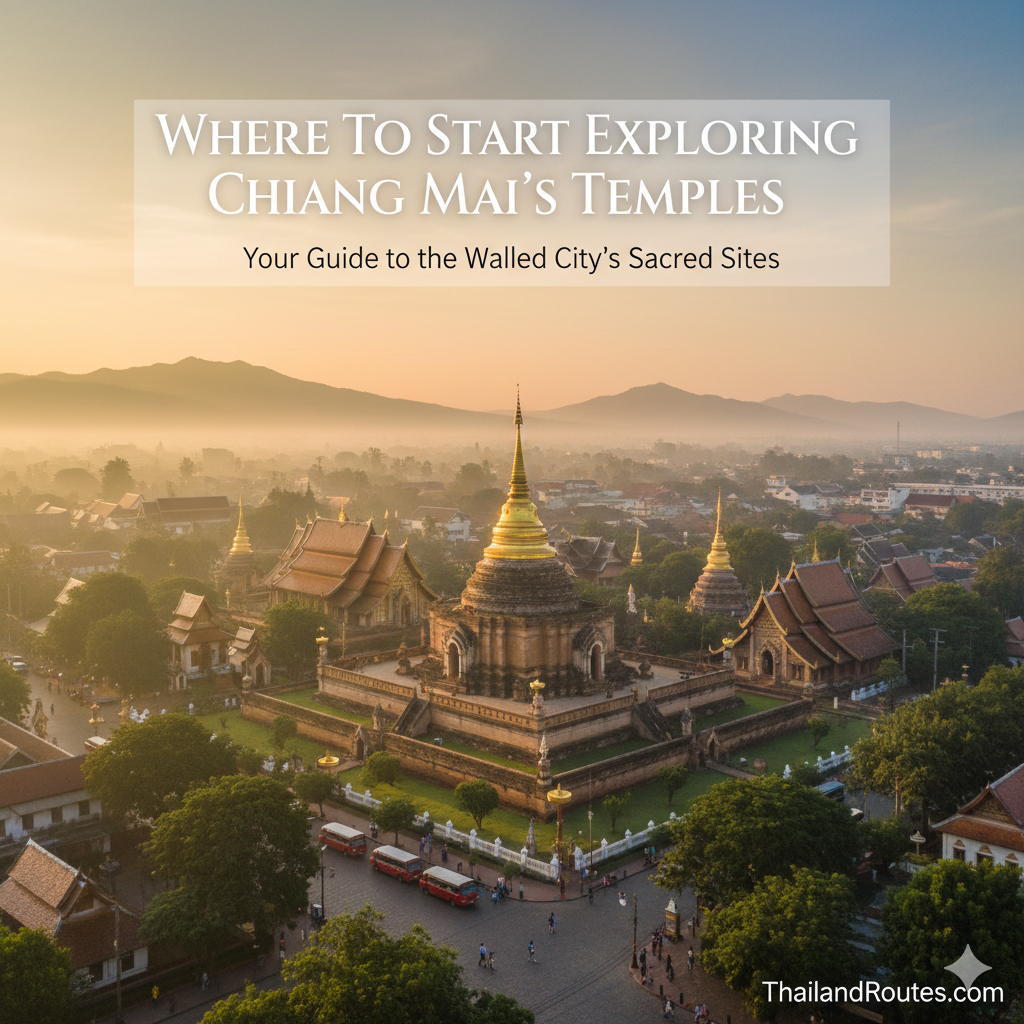
Discovering the Soul of Chiang Mai
Chiang Mai is often called the cultural heart of Northern Thailand, and for good reason. Behind its laid-back charm, lush mountains, and vibrant night markets lies something deeper — a spiritual heritage that spans over 700 years.
This heritage is best experienced through the city’s temples, or wats. With over 300 temples scattered across the city and surrounding hills, Chiang Mai offers one of the richest temple experiences in Southeast Asia.
For first-time visitors, the sheer number of temples can feel overwhelming. Where do you begin? Which temples are truly essential? How do you explore them efficiently while respecting local traditions?
This article gives you a well-planned temple route, starting in the Old City, moving outward to iconic hillside temples, and finishing with cultural tips that will make your experience meaningful and respectful.
1. Why Chiang Mai’s Temples Are So Special
Before we dive into the route, it’s worth understanding why Chiang Mai’s temples are unique.
- Historical significance: Chiang Mai was founded in 1296 as the capital of the Lanna Kingdom. Many temples date back to this period.
- Distinct architecture: Unlike the golden, glittering temples of Bangkok, Chiang Mai’s temples blend Burmese, Lanna, and Lao influences.
- Spiritual centers: Temples are not just tourist attractions — they’re active places of worship, schools, and community hubs.
- Peaceful atmosphere: Many temples are nestled inside leafy courtyards, away from noisy streets, making them perfect for quiet reflection.
2. Best Time and Way to Start Your Temple Tour
- Morning is ideal. Early hours (7:00–10:00 AM) offer cooler temperatures, fewer tourists, and a chance to see monks chanting or collecting alms.
- Wear appropriate clothing. Shoulders and knees must be covered; no shoes or hats inside temple buildings.
- Carry water, sunscreen, and a sarong (many temples are outdoors).
- Use local transport. For the Old City temples, walking or using a Songthaew (red truck) is perfect. For temples outside the city, like Doi Suthep, hiring a tuk-tuk or songthaew is easiest.
3. Start in the Old City — Chiang Mai’s Sacred Core
The Old City is surrounded by a square moat and remnants of ancient walls. Inside this 1.5 km² area, dozens of stunning temples are just a short walk apart. This makes it the best place to begin your temple exploration.
3.1 Wat Phra Singh — The Royal Temple of Lanna
Wat Phra Singh is often the first temple travelers visit, and for good reason — it’s one of Chiang Mai’s most important.
- Founded: 14th century
- Famous for: Its elegant Lanna-style architecture, gilded chedi (stupa), and the revered Phra Singh Buddha image.
- Why start here: Wat Phra Singh is central, beautifully maintained, and gives a perfect introduction to traditional Northern Thai design.
What to look for:
- The gold-covered stupa that reflects sunlight.
- Murals depicting local Lanna village life.
- The inner ordination hall (ubosot) with intricate wood carvings.
Opening Hours: 6:00 AM – 5:00 PM
Entrance Fee: 20 THB (donation encouraged)
3.2 Wat Chedi Luang — The Temple of the Great Stupa
Just a 10-minute walk from Wat Phra Singh stands one of the most awe-inspiring structures in Chiang Mai.
- Founded: 14th century
- Famous for: Its massive brick chedi, partially destroyed in an earthquake in 1545.
- Why visit: It once housed the Emerald Buddha (Thailand’s most sacred relic), and the structure still radiates ancient power.
What to look for:
- The towering chedi — climb up close to see elephant carvings and ancient brickwork.
- The city pillar shrine (Sao Inthakhin).
- Monks offering blessings to visitors.
Opening Hours: 6:00 AM – 6:00 PM
Entrance Fee: 50 THB
3.3 Wat Chiang Man — The Oldest Temple in the City
Wat Chiang Man is the oldest temple in Chiang Mai, built by the city’s founder King Mengrai.
- Founded: 1297
- Famous for: Elephant-supported chedi and ancient Buddha statues.
- Why visit: It offers a quieter, more reflective atmosphere compared to the bigger temples.
What to look for:
- The “Elephant Chedi” — a stupa surrounded by stone elephant carvings.
- Two Buddha images, including one said to bring rain.
- Peaceful gardens and courtyards.
Opening Hours: 6:00 AM – 5:00 PM
Entrance Fee: Free
3.4 Wat Phan Tao — The Wooden Temple
This temple stands right next to Wat Chedi Luang but offers a completely different atmosphere.
- Founded: 14th century
- Famous for: Its teak wood viharn (main hall), one of the last all-wood temples in the city.
- Why visit: A beautiful example of traditional craftsmanship.
What to look for:
- Hand-carved teak pillars and gables.
- The elegant Buddha statue inside.
- Lanterns during festivals like Loy Krathong.
Opening Hours: 6:00 AM – 6:00 PM
Entrance Fee: Free
4. Midday Break: Refuel Like a Local
Exploring temples can be physically demanding. Luckily, the Old City is full of local cafes, juice bars, and food stalls. A short lunch break lets you recharge before heading to more temples.
Try grabbing a bowl of Khao Soi, Chiang Mai’s signature noodle curry, or sip an iced Thai coffee at a shaded café.
5. Expand Outward — Temples Beyond the Moat
Once you’ve experienced the spiritual core of Chiang Mai, it’s time to head a little farther out. The next stops are still easy to reach by walking, cycling, or a quick songthaew ride.
5.1 Wat Suan Dok — The Garden Temple
Located west of the Old City, Wat Suan Dok is a serene temple with whitewashed stupas and a golden chedi.
- Founded: 14th century
- Famous for: Its large central stupa and being the resting place of Lanna royal family ashes.
- Why visit: Fewer crowds, spacious grounds, and excellent photo opportunities at sunset.
What to look for:
- The stunning gold chedi.
- Rows of small white stupas.
- Monks who offer free “monk chats” for visitors wanting to learn about Buddhism.
Opening Hours: 6:00 AM – 6:00 PM
Entrance Fee: Free
5.2 Wat Lok Moli — The Quiet Gem
Just north of the Old City moat, Wat Lok Moli is often overlooked by tour groups, making it perfect for those seeking peace.
- Founded: 14th century
- Famous for: A beautiful brick chedi and elegant teakwood viharn.
- Why visit: It’s one of the most photogenic yet calm temples in Chiang Mai.
What to look for:
- Lanna-style roof decorations.
- Ancient brick chedi in excellent condition.
- Gardens with statues and shaded spots.
Opening Hours: 6:00 AM – 6:00 PM
Entrance Fee: Free
6. End Your Day at the Crown Jewel — Wat Phra That Doi Suthep
No temple itinerary in Chiang Mai is complete without visiting Wat Phra That Doi Suthep, the most famous temple in Northern Thailand.
6.1 Why Doi Suthep is Iconic
- Perched on a mountain about 15 km from the city center.
- Offers panoramic views of Chiang Mai.
- One of Thailand’s most sacred pilgrimage sites.
Legend says a white elephant carrying a sacred relic climbed Doi Suthep mountain and trumpeted three times before dying. A temple was built on that very spot.
6.2 Getting There
- Songthaew: The most popular and budget-friendly option. Red trucks leave from Chang Phuak Gate or the north side of the Old City for around 60 THB per person.
- Motorbike: If you’re confident, the winding mountain road offers scenic views.
- Taxi or Grab: More comfortable but pricier.
6.3 What to Expect
- The staircase: 306 steps lined with naga (serpent) railings. You can also take an elevator for a small fee.
- The golden stupa: Dazzling in sunlight, it houses the sacred relic.
- Bells and shrines: The temple complex is full of small corners to explore.
- The viewpoint: Overlooks Chiang Mai city and the surrounding valley.
Opening Hours: 6:00 AM – 8:00 PM
Entrance Fee: 50 THB
Pro Tip: Arrive in the late afternoon to enjoy the sunset. The temple glows, the city lights twinkle below, and monks begin their evening chants.
7. Alternative Temples for Return Visitors
If you want to explore beyond the classic route, Chiang Mai has many other beautiful and less crowded temples worth visiting:
- Wat Umong: A forest temple with tunnels, located west of the city near Chiang Mai University. Peaceful and atmospheric.
- Wat Jed Yod: Known for its unique seven-spired chedi inspired by Indian architecture.
- Wat Sri Suphan: Also known as the Silver Temple, famous for its intricate silverwork (note: only men are allowed inside the ordination hall).
- Wat Phra That Doi Kham: A lesser-known hilltop temple with great views and fewer crowds.
8. Temple Etiquette: How to Be a Respectful Visitor
Temples are sacred spaces, not tourist attractions. To make your visit meaningful and respectful:
- Dress modestly: Shoulders and knees must be covered.
- Remove shoes and hats before entering temple halls.
- Speak quietly: Maintain a calm, respectful atmosphere.
- Avoid touching Buddha images.
- Do not point your feet toward monks or Buddha statues.
- Sit with your feet tucked under you when inside a prayer hall.
- Women should not touch monks. If offering something, place it on a cloth or tray.
If unsure, observe how locals behave.
9. Suggested Temple Itinerary for One Perfect Day
Here’s a practical route to see the most important temples in Chiang Mai without feeling rushed:
| Time | Temple | Why Visit |
|---|---|---|
| 7:00 AM | Wat Phra Singh | Peaceful early morning atmosphere |
| 8:30 AM | Wat Chedi Luang | Massive chedi, central location |
| 9:30 AM | Wat Chiang Man & Wat Phan Tao | Oldest and teakwood temples |
| 11:00 AM | Wat Suan Dok | Calm, spacious grounds |
| 12:00 PM | Lunch break | Khao Soi or Thai iced tea |
| 1:30 PM | Wat Lok Moli | Quiet, photogenic stop |
| 3:00 PM | Travel to Doi Suthep | Scenic ride up the mountain |
| 4:00 PM | Wat Phra That Doi Suthep | Sunset views, golden stupa |
| 6:30 PM | Return to city | Night market dinner |
10. Tips for an Unforgettable Temple Experience
- Start early. Temples are most peaceful in the morning.
- Carry a sarong or scarf. Many travelers use this to cover shoulders or legs.
- Bring cash. Small donations help maintain the temples.
- Stay hydrated. You’ll be walking a lot.
- Allow quiet time. Don’t rush — sit, breathe, and feel the atmosphere.
- Visit during a festival if you can. Events like Loy Krathong or Songkran turn temples into magical places full of lanterns and candles.
11. Temple Festivals and Special Events
- Loy Krathong (November): Temples are decorated with lanterns, and locals float krathongs on the water.
- Songkran (April): Temples become gathering places for water blessings and merit-making.
- Visakha Bucha Day: A Buddhist holiday celebrated with candlelit processions.
Visiting during one of these festivals is a once-in-a-lifetime experience.
12. Understanding Buddhist Elements in Temples
To appreciate what you see, it helps to know a few key features:
- Chedi (stupa): Bell-shaped structure containing relics.
- Ubosot: Ordination hall where monks perform rituals.
- Viharn: Main worship hall open to the public.
- Naga: Serpent figures guarding temple stairs.
- Bodhi tree: A sacred fig tree representing enlightenment.
These elements appear in almost every Chiang Mai temple, though each has its own character.
13. Getting Around Chiang Mai’s Temples
- Walking: Best for Old City temples. Everything is within 15–20 minutes on foot.
- Songthaew (red truck): Ideal for short rides and trips to Doi Suthep.
- Bicycle: Many guesthouses rent bicycles, perfect for a slow-paced tour.
- Tuk-tuk or Grab: Good for comfort or group travel.
- Guided tours: If you want historical context, consider joining a temple walking tour.
14. Common Mistakes to Avoid
- Wearing revealing clothes: You may be denied entry.
- Climbing on Buddha statues: Never acceptable.
- Speaking loudly or taking flash photos: Disrespectful to monks and worshippers.
- Rushing through temples: Take time to absorb the atmosphere.
- Touching relics or offerings: Leave them undisturbed.
15. Chiang Mai Temples Beyond Tourism
While many travelers visit temples for their beauty, remember that for locals, they are living places of faith. Monks meditate here. Families come to pray, give alms, or celebrate festivals. If you pause and sit quietly, you’ll feel that deeper layer of meaning.
Conclusion: Begin Your Chiang Mai Journey with the Temples
Chiang Mai’s temples are more than architectural masterpieces. They are windows into the soul of Northern Thailand — places where history, spirituality, and daily life intersect.
Starting your exploration in the Old City lets you understand the heart of the Lanna Kingdom. Continuing to Wat Phra That Doi Suthep gives you the panoramic, spiritual finale every traveler remembers.
Whether you’re walking barefoot over smooth temple floors or watching monks chant as the sun rises, these experiences will stay with you long after you leave.
So tie your sarong, slow your pace, and let Chiang Mai’s temples tell their story.
Leave a Reply