
When I was walking through night markets in Thailand, I realized something quickly: not every souvenir is worth your money. Many products look similar at first glance, but quality, price, and authenticity vary a lot. Over time, I learned what makes sense to buy, what to skip, and how to choose items that are practical, meaningful, and easy to carry home.
In this guide, I’m sharing what I personally examined in markets, what I would buy again, and what I would avoid. No exaggerated descriptions — just useful, experience-based information.
Hand-Carved Wooden Souvenirs
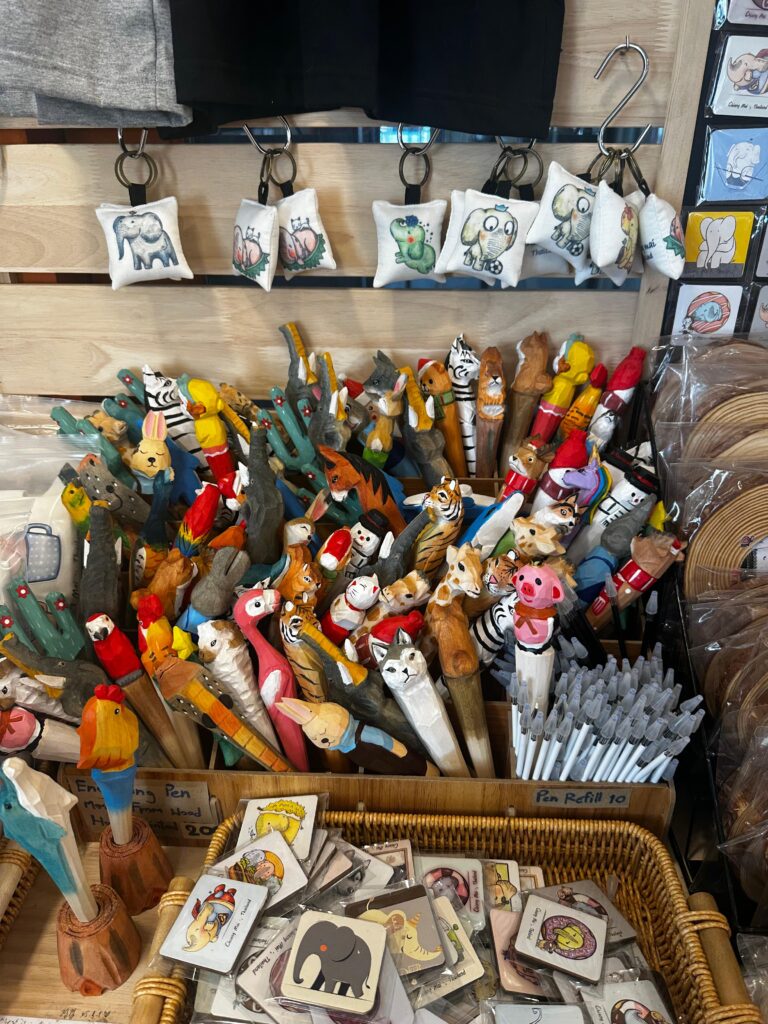
In Chiang Mai and in several Bangkok markets, I saw many wooden handicrafts. The most common items were animal-shaped pens, elephant keychains, small carved animal statues, and fridge magnets.
I picked up several pieces to check the quality. Here’s what I noticed:
- Better pieces have smooth edges and balanced paint.
- Cheap versions often have visible glue marks or rough carving.
- The weight should feel solid but not heavy.
Prices usually ranged between $1 and $10 for small items. Larger carved figures went up to $15–$20.
If you want affordable gifts for friends or coworkers, these are practical. They are lightweight and don’t take much luggage space. I would especially recommend the hand-carved animal pens — they’re inexpensive but look unique compared to standard souvenir pens.
Coconut Shell Bowls and Decor
Coconut bowls were everywhere — especially in night markets and tourist-heavy areas. Some were plain and polished, others were hand-painted with elephants, jungle scenes, or sunsets.
I checked several bowls carefully. The important things:
The inside should be fully lacquered and smooth.
No cracks along the rim.
The base should be stable so it doesn’t wobble.
Prices usually started around $5 and went up to $20 depending on artwork.
I like these because they are useful at home — for snacks, fruit, or even as a key bowl near the entrance. They are also easy to wrap in clothes inside your suitcase for protection.
If you prefer sustainable products, this is one of the better souvenir options since coconut shells are reused rather than discarded.
Note: You need to bargain. I bought them for 80-100 Baht each.

Thai Silk
Thai silk is widely available, but quality varies significantly. I compared silk in markets with silk in established stores. The difference is noticeable.
Here’s what I learned:
- Real silk feels cool at first touch.
- It has a natural sheen, not a plastic shine.
- When you scrunch it lightly, it creates soft wrinkles that disappear quickly.
Market silk scarves usually cost between $10 and $40. In premium stores, prices start around $50 and can go much higher.
If you’re buying silk as a serious gift, I recommend purchasing from a reputable store rather than a random stall. If it’s more of a casual souvenir, market silk can still be a reasonable choice.
Thai Spices and Curry Pastes
If you cook at home, spices are one of the most practical souvenirs.
I bought sealed curry pastes from supermarkets rather than open spice bags from markets. It’s safer for customs and more hygienic.
What I found worth buying:
- Green curry paste
- Massaman curry paste
- Tom Yum paste
- Thai chili flakes
- Coconut sugar
Prices are usually between $1 and $6 per pack.
They don’t take much space, and they allow you to recreate Thai dishes at home. This is one of the easiest souvenirs to justify because it’s affordable and consumable.
Thai Tea and Local Coffee
Thai tea mix is widely available in supermarkets and markets. It’s inexpensive and easy to carry.
If you enjoy coffee, northern Thailand produces locally grown coffee beans. I found better quality in supermarkets compared to street stalls.
These products typically cost between $3 and $10. I consider them good gifts because they are practical and won’t sit unused on a shelf.
Thai Clothing from Markets
Night markets sell a large variety of clothing: cotton shirts, lightweight pants, bohemian-style dresses.
I noticed that:
- Fabric thickness varies significantly.
- Some white fabrics are slightly transparent.
- Stitching quality can differ even between identical-looking items.
Prices usually range from $5 to $40 depending on material.
If you want something comfortable for summer, loose cotton shirts are a good choice. I would not recommend buying expensive fashion pieces from random stalls unless you’ve checked quality carefully.
Note: Some products in certain markets may be second-hand. Please inquire before purchasing the product.
Thai Spa and Herbal Products
Thailand is known for massage products and herbal balms.
I saw:
- Tiger balm
- Herbal compress balls
- Lemongrass oil
- Coconut oil
- Herbal inhalers
These are small, affordable, and easy to pack. Prices usually range from $2 to $15.
If you buy oils, make sure the lid is sealed properly to avoid leakage in your luggage.
Where I Found Better Prices
From my experience:
- Night markets are good for variety.
- Supermarkets are better for food products.
- Areas slightly away from major tourist streets usually offer lower prices.
- Fixed-price stores don’t allow bargaining.
- Markets usually allow negotiation.
When bargaining, I started about 30% below the asking price and adjusted from there.
Final Recommendation
During my trip to Thailand, I personally chose to buy simple and practical souvenirs rather than large decorative items. I picked up several fridge magnets with Thai-themed designs, a few decorative bottle openers featuring local motifs, and some Thailand-themed shot glasses. I also bought a set of souvenir chopsticks, which were lightweight and easy to pack. These items were affordable, practical, and easy to distribute as small gifts. Most importantly, they didn’t take up much space in my luggage, which made them convenient choices for travel.
Frequently Asked Questions (FAQ)
1. What is the best souvenir to bring from Thailand?
Curry pastes, Thai silk, and handmade wooden crafts are practical and culturally relevant choices.
2. Are coconut bowls safe for food use?
Yes, if they are properly lacquered and sealed inside. Always check the interior finish.
3. Is bargaining normal in Thai markets?
Yes, bargaining is common in open markets but not in shopping malls or fixed-price stores.
4. How can I tell if Thai silk is real?
Real silk feels cool initially, has a natural shine, and soft wrinkles when gently scrunched.
5. Can I bring Thai spices through customs?
Usually yes, if they are commercially sealed. Always check your country’s import regulations before traveling.
Leave a Reply