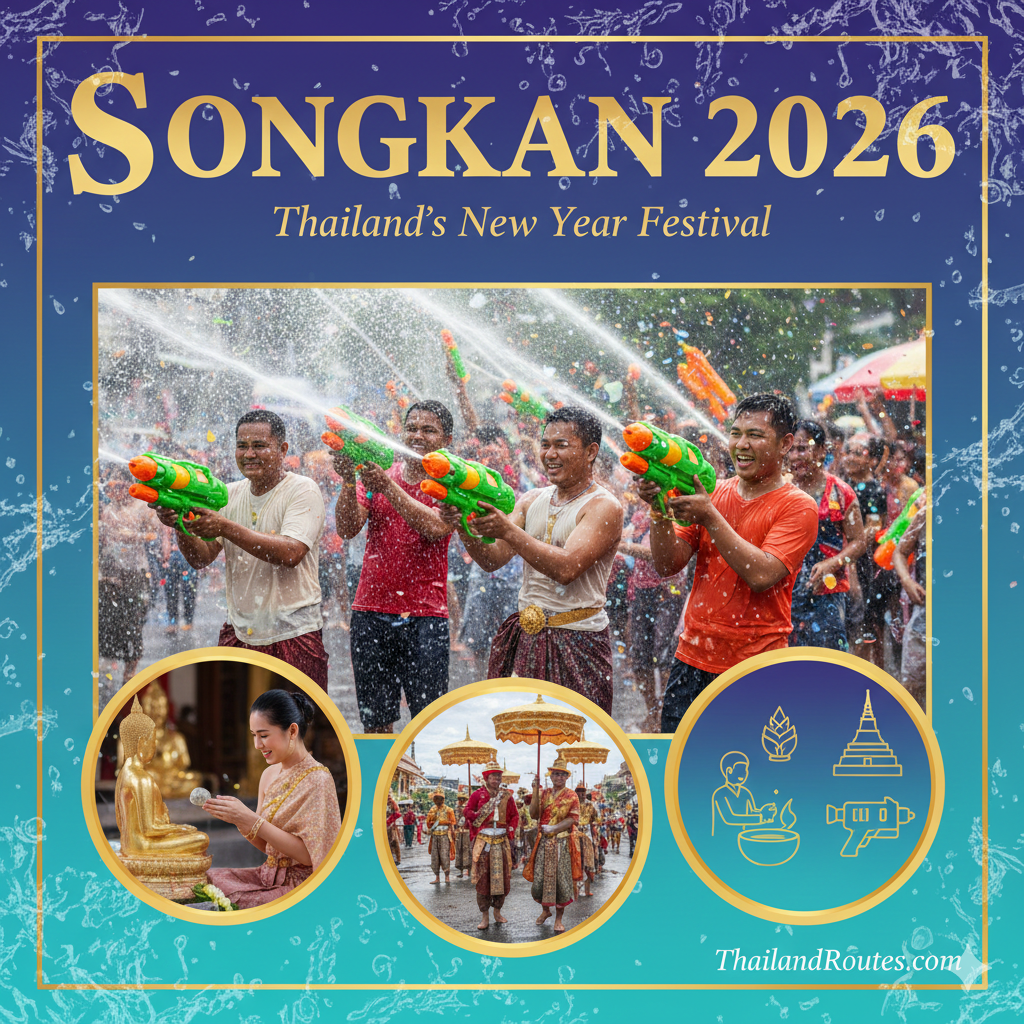
The Songkran Festival is Thailand’s most famous and culturally significant celebration, marking the traditional Thai New Year. Observed annually in mid-April, Songkran is globally recognized for its large-scale water celebrations, yet its true meaning goes far beyond playful street battles. Rooted in ancient spiritual traditions, Songkran represents purification, renewal, respect for elders, and a symbolic cleansing of misfortune from the previous year.
In 2026, Songkran continues to evolve as both a deeply spiritual observance and one of the world’s most vibrant cultural festivals. Travelers, digital nomads, and culture enthusiasts increasingly seek not just the festivities, but also the stories, rituals, and values that define Songkran. Understanding these layers transforms the festival from a tourist attraction into a meaningful cultural experience.
The Meaning of Songkran: More Than a Water Festival
The word Songkran originates from Sanskrit, meaning “to move” or “to pass,” symbolizing the sun’s transition into a new zodiac cycle. In Thai belief, this celestial movement signals renewal, change, and the beginning of a fresh year.
Water plays a central role because it symbolizes purification. Traditionally, gently pouring water over Buddha statues and the hands of elders was believed to wash away bad luck and invite prosperity. Over time, these rituals expanded into joyful public celebrations, while still retaining their symbolic essence.
Despite modern adaptations, the philosophical core of Songkran remains intact: humility, gratitude, and renewal.
Historical Origins of Songkran
Songkran dates back more than 700 years, with roots in ancient Brahman and Buddhist traditions across Southeast Asia. Similar New Year festivals exist in neighboring countries, but Thailand’s interpretation has become the most internationally recognized.
Historically, Songkran was a family-centered event. Homes were cleaned thoroughly, Buddha images were washed with scented water, and elders were honored through blessings. Community temples became gathering points where people made merit, offered food to monks, and reflected on moral conduct for the year ahead.
In 2018, Songkran was officially recognized by the Thai government as an intangible cultural heritage, reinforcing its importance beyond entertainment. By 2026, preservation efforts focus on balancing cultural authenticity with modern tourism demands.
When Is Songkran Celebrated?
Songkran traditionally takes place from April 13 to April 15, though celebrations often extend before and after these dates depending on the region.
In 2026:
- April 13 marks the official New Year’s Day.
- April 14 is traditionally dedicated to family and elders.
- April 15 focuses on temple rituals and merit-making.
Some cities, particularly tourist hubs, extend festivities for up to a week. This extended schedule allows visitors to experience both traditional ceremonies and modern celebrations.
Where Is Songkran Celebrated Most Intensely?
While Songkran is celebrated nationwide, each region offers a distinct atmosphere.
Bangkok: Tradition Meets Modern Energy
In Bangkok, Songkran blends sacred rituals with large-scale urban festivities. Temples such as Wat Pho and Wat Arun host traditional ceremonies, while major avenues turn into water-filled celebration zones. The city offers the widest contrast between old and new traditions.
Chiang Mai: The Cultural Heart of Songkran
Chiang Mai is widely regarded as the most authentic place to experience Songkran. Surrounded by ancient city walls and moats, Chiang Mai’s celebrations incorporate parades, religious ceremonies, and structured community events that reflect northern Thai heritage.
Phuket and Coastal Regions
Beach destinations like Phuket transform Songkran into a festive blend of local culture and international tourism. While water celebrations dominate, many temples still host traditional rituals early in the mornings.
Traditional Songkran Rituals Explained
Water Blessing of Elders
Known as Rod Nam Dam Hua, this ritual involves gently pouring scented water over the hands of elders to ask for forgiveness and receive blessings. It reinforces respect, family unity, and generational continuity.
Buddha Image Cleansing
Devotees visit temples to bathe Buddha statues with jasmine-infused water. This act symbolizes purification of the soul and intention to live virtuously in the new year.
Merit-Making at Temples
Merit-making includes offering food to monks, releasing birds or fish, and donating to temples. These actions reflect Buddhist values of compassion and generosity.
Modern Songkran Celebrations
By 2026, Songkran has become a hybrid festival combining ancient rituals with contemporary celebration culture. Water guns, music stages, and organized street events are common, particularly in urban areas.
However, Thai authorities increasingly emphasize “responsible celebration.” Campaigns promote respectful behavior, discourage alcohol abuse, and protect cultural integrity. Many cities now designate alcohol-free zones and cultural areas where traditional practices take precedence.
Songkran and Tourism in 2026
Songkran remains one of Thailand’s strongest tourism drivers. According to recent trends, visitors are increasingly interested in cultural immersion rather than purely entertainment-focused experiences.
Key tourism trends include:
- Temple-based cultural tours during Songkran
- Eco-friendly celebrations reducing water waste
- Community-led events in smaller towns
- Digital nomad travel aligned with festival periods
The Thai government continues to invest in sustainable tourism initiatives to ensure Songkran remains culturally respectful and environmentally responsible.
Cultural Etiquette During Songkran
Understanding etiquette is essential, especially for international visitors.
Water should never be thrown at monks, elders, babies, or people who clearly do not wish to participate. Using ice water or high-pressure devices is discouraged in many areas. Modest clothing is recommended near temples, even during water activities.
Respecting these norms ensures positive interactions and preserves the festival’s dignity.
Environmental Concerns and Sustainability
In recent years, water usage has become a major concern. Thailand has introduced conservation campaigns encouraging the use of recycled water and limiting excessive waste.
By 2026, many municipalities promote:
- Timed water zones
- Reusable water containers
- Public awareness campaigns on conservation
These measures reflect a broader shift toward sustainable cultural tourism.
Why Songkran Matters in Modern Thailand
Songkran is not just a celebration; it is a cultural anchor. In an era of rapid globalization, it reinforces Thai identity, Buddhist values, and community bonds.
For younger generations, Songkran serves as a bridge between tradition and modern expression. For visitors, it offers a rare opportunity to experience living culture rather than staged heritage.
Conclusion: Experiencing Songkran Beyond the Surface
The Songkran Festival is far more than a global water party. It is a layered cultural event shaped by centuries of belief, spirituality, and social values. In 2026, Songkran stands as a powerful reminder that celebration and reflection can coexist.
Whether experienced in a temple courtyard, a family home, or a bustling city street, Songkran offers a unique perspective on renewal, respect, and human connection. Understanding its meaning transforms participation into appreciation, and appreciation into lasting memory.
Leave a Reply