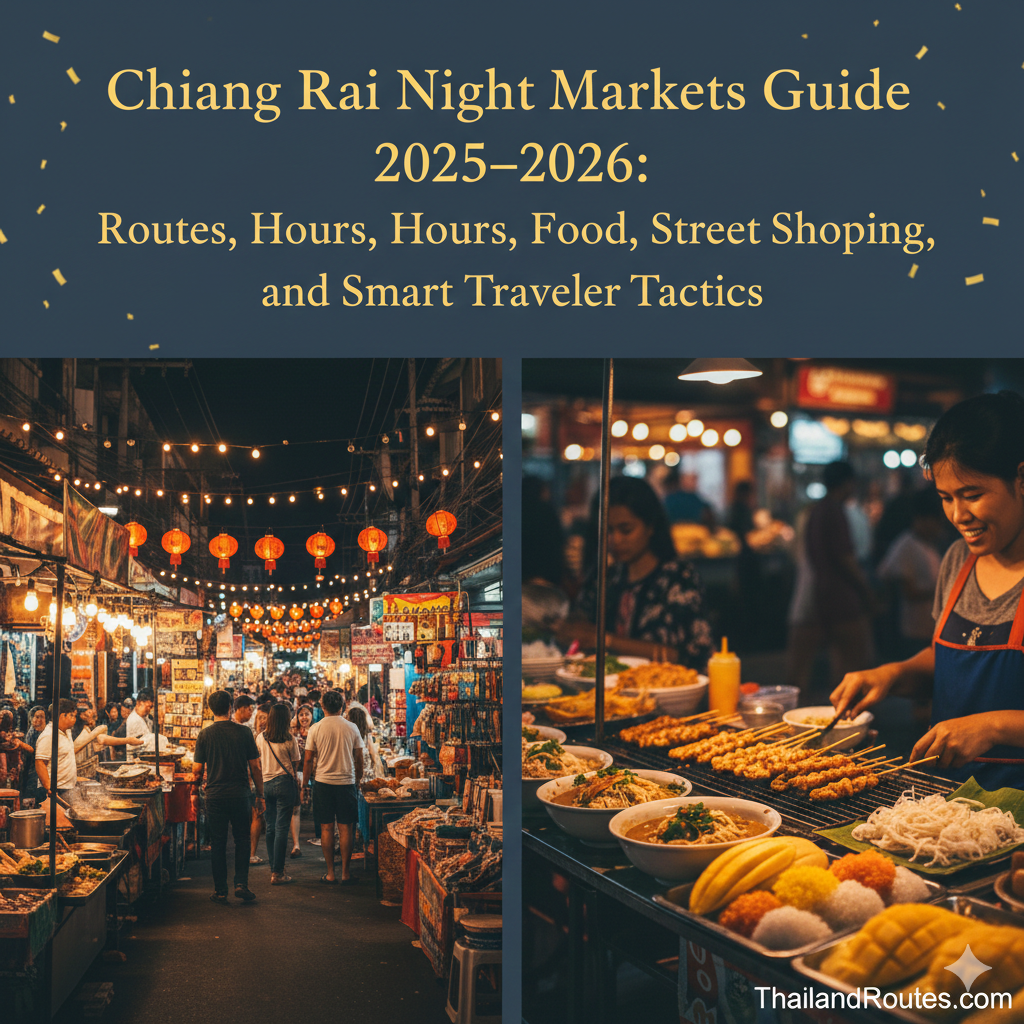
Chiang Rai sits close to the mountains of Northern Thailand and spends its days unhurried—temples, coffee roasters, workshop ateliers. After dusk, the city rewires itself. Streets are cordoned off, string lights appear, grills snap and crackle, and entire neighborhoods turn into open-air marketplaces. Visitors often assume there’s a single “night market.” In reality, Chiang Rai’s night scene is a weekly rhythm made from three pillars:
- a daily bazaar core in the center,
- a Saturday pedestrian fair with a craft focus, and
- a cozier Sunday walking street that locals actually use for dinner and errands.
This guide lays out where to go on which night, the realistic prices you’ll pay, how to bargain without awkwardness, and routes that string together food, handicrafts, and the city’s golden clock-tower light show.
How Many Night Markets Does Chiang Rai Really Have?
Night markets ebb and flow with seasons and holidays, yet travelers can rely on three primary experiences throughout the year:
- Chiang Rai Night Bazaar (daily) — the all-purpose corridor of covered aisles, food courts, souvenir and craft vendors.
- Saturday Walking Street on Thanalai Road — a weekly craft-heavy pedestrian event, late afternoon into late evening.
- Sunday Walking Street (Sankhong Happy Street) — a neighborhood-scale market on San Khong Noi Road, mostly food and practical shopping with a friendly, local crowd.
Around these anchors you’ll also find street-food clusters near the city gates and small pop-ups that appear on festival weekends. If you have just one night, the Night Bazaar will cover your bases. If you’re here over a weekend, plan to do Saturday and Sunday both; they feel distinct and complementary.
1) Chiang Rai Night Bazaar: The Nightly All-Rounder
Location
A short walk south of the central Bus Terminal 1, in and around the lanes off Phahonyothin/Chang Klan axis. The bazaar is compact enough to cover on foot, but layered enough that you’ll keep discovering side aisles you missed the first pass.
Typical Hours
Evenings to around 10:30–11:00 p.m. Stalls multiply on Friday and Saturday; weekday nights are quieter but friendlier for bargaining.
What You’ll Find
- Craft lines: carved wood accents, paper lanterns, bamboo lamps, lacquer trays, textiles woven in northern patterns, simple silver pendants.
- Wearables: breathable cotton shirts, wrap pants, light dresses, hill-tribe motifs incorporated into bags and belts.
- Art & stationery: watercolor temple scenes, monochrome prints, hand-stamped notebooks.
- Food courts: communal tables ringed by grills and woks; sometimes a small stage with music or dance.
Price Signals
- Basic tees: 120–250 THB
- Scarves (cotton/indigo): 250–600 THB
- Small silver accents: 250–700 THB
- Street mains: 50–90 THB; desserts 20–50 THB; fruit shakes 30–60 THB
Navigation Tips
Walk the main lane once, then double back through the covered courts where many higher-quality craft stalls prefer to set up. If you time your stroll right, you can slip out for the Clock Tower light show on the hour (details further below) and return for dessert after.
Bargaining Without Drama
Start a little under the asking price, keep the tone warm, and bundle where possible (“How much for two?”). Near closing time and on slow mid-week evenings, you’ll notice softer prices. If a stall says fixed price, don’t push; many artisans price things fairly.
2) Saturday Walking Street (Thanalai Road): One Night, Many Makers
Location
Thanalai Road, an easy walk from the bazaar core. The street closes to traffic and becomes a wide pedestrian lane.
Typical Hours
Saturdays from late afternoon (around 4:30–5:00 p.m.) to late evening (about 10:00–11:00 p.m.). Aim to arrive before sunset to browse the best stock while there’s still daylight.
Why Saturday Feels Different
Saturday is where Chiang Rai’s artisan side steps forward. You’ll see hand-tooled metalware, textiles with natural dyes, minimalist ceramics, and small workshops selling belts or sandals with better leather than you see in beach towns. Temple courtyards along the route host calmer food zones and community performances.
Shop With Intention
- Silver and metal: small bowls, tea cups, hammered trays; look for even hammer marks and tidy finishing.
- Textiles: indigo and plant-dyed scarves, table runners, cushion covers; ask about fiber content—100% cotton breathes best.
- Ceramics: functional pieces you’ll use at home—pour-over drippers, tea cups, little bowls—easy to pack and easy to love.
- Leather: simple belts and sandals from tiny ateliers; check stitching and buckle quality.
Snack Trail
Grilled pork neck with lime-chili dip, mushroom skewers, sai ua (herb-rich northern sausage), and butterfly-pea tea. If lines are long on the main spine, step into a temple yard where the food queues are shorter and there’s usually a place to sit.
3) Sunday Walking Street (Sankhong Happy Street): A Neighborhood Evening
Location
San Khong Noi Road, known locally as Sankhong Happy Street. It reads less like a tourist showcase and more like a Sunday evening routine for the neighborhood.
Typical Hours
Sundays from late afternoon until around 9:30 p.m. Vendors begin setting up in the hour before, so early birds get first pick and easier photos.
Vibe
Families shopping for snacks, students selling crafts, neighbors greeting neighbors. Prices feel local. If you want to eat like you live here, this is the night to prioritize.
What to Eat
- Khanom jeen nam ngiao: a northern noodle soup with tomato-forward broth that belongs to Chiang Rai as much as khao soi belongs to Chiang Mai; don’t leave without trying it.
- Khao soi: creamy coconut curry noodles with crisp egg noodles on top.
- Sai ua: sliced and shared from a hot grill.
- Desserts: coconut custard pancakes (kanom krok), banana roti, Thai crepes.
- Drinks: fresh sugarcane juice, longan drinks, lime sodas.
What to Buy
Handmade soaps, small ceramics, simple jewelry, stationery, hair accessories, and budget-friendly wearables. This is the place to scoop up useful souvenirs rather than decorative dust-collectors.
The Clock Tower: Use the Light Show as Your Pacer
Chiang Rai’s ornate golden clock tower anchors a busy roundabout in the center. Three brief light-and-sound shows typically run at 7:00 p.m., 8:00 p.m., and 9:00 p.m. each night. Use them as bookmarks for your evening:
- Browse the Night Bazaar, stroll to the clock tower for the 8:00 p.m. show, then return for dessert.
- On Saturdays, take a break from Thanalai Road to catch the 7:00 p.m. or 8:00 p.m. show, then rejoin the crowd.
- On Sundays, pair Sankhong Happy Street early and the 9:00 p.m. show to finish.
Shows last only a few minutes; arrive a couple of minutes early and stand on the outer ring of the roundabout for a cleaner line of sight.
Eating Well: A Northern Thailand Field Guide for the Night Markets
Northern Icons
- Nam ngiao: tangy, savory, and uniquely tied to Chiang Rai’s Shan/Lanna heritage; often served with fermented rice noodles (khanom jeen).
- Khao soi: rich coconut broth, chicken or beef, crispy noodle crown, and a side of pickled greens and shallots.
- Sai ua: pork sausage mixed with lemongrass, kaffir lime leaf, chilies, and herbs; intense and addictive.
- Nam prik ong / nam prik num: mild tomato-pork chili dip, and a green chili dip; both come with boiled veg and pork crackling.
Night-Market Comforts
- Moo ping (pork skewers) with sticky rice
- Grilled chicken wings, crispy pork bowls
- Stir-fried noodles, seafood skewers, fried squid with lime and chili
- Desserts like Thai roti and kanom krok
- Fresh fruit smoothies and Thai iced tea
Allergy & Spice Awareness
If you need mild heat, say “a little spicy” politely. For allergies, have a short note translated or ready on a phone screen—peanuts, shellfish, and soy products show up in sauces.
What to Buy: The Short List That Ages Well
Textiles
Indigo or plant-dyed cotton scarves, soft wraps, and small table runners. They pack flat, last long, and get real use at home.
Ceramics & Tea Gear
Little bowls, cups, and pour-over drippers—keep to small forms and you’ll avoid weight penalties in your luggage.
Silver & Metal
Look for clean hammer marks, tidy finishing, and smooth edges. If a seller uses “925” marks, ask what part is sterling and how it was made; conversation is half the fun.
Everyday Gifts
Herbal balms and soaps, coconut oil, dried longan or mango, northern tea and coffee blends. Choose sealed goods with ingredient labels.
Quality Checks in Seconds
- Textiles: Look for fiber labels; if none, do a quick breathability test in your hands.
- Leather: Flex the belt near the buckle holes; if it cracks, skip it.
- Ceramics: Run a finger around the rim; rough edges mean seconds.
- Cosmetics: Buy sealed, labeled items from stalls with consistent branding.
Money, Safety, and Etiquette
Cash vs. QR
Cash remains the default; PromptPay QR is increasingly common but not universal. ATMs cluster around the bus terminal and main arteries.
Pickpockets?
Rare, but night markets are crowds. Keep your phone and wallet front-facing and zipped. A small cross-body bag is ideal.
Bargaining Culture
Bargaining is friendly theater. Smile, counter once or twice, bundle items for a better offer, and let it go if the seller declines. For handmade pieces priced fairly, lots of vendors won’t negotiate—and that’s fine.
Temple Courtyards
Both Saturday and Sunday markets often spill into temple grounds. Dress modestly if stepping inside active worship spaces; keep voices low; remove hats.
Waste & Reuse
Carry a tote and refuse plastic cutlery when you can. Markets are community efforts; leave them cleaner than you found them.
Getting Between Markets Without Stress
Walkable Core
The Night Bazaar, the clock tower, and central streets sit close together. You can link them on foot with short hops.
Songthaews & Tuk-Tuks
Flag them down, state your destination, and agree on the fare before boarding. If a quote feels high, try the next one; competition is healthy.
Grab/Bolt
Best for quick jumps between the Saturday or Sunday street and your hotel. Prices are modest; avoid peak surges by walking one block off the main closure.
Scooter
Useful if you’re experienced, but park a block away from the pedestrian zone. Night closures mean detours—factor time in.
Weather, Seasons, and Holiday Quirks
- Daily vs. weekly: The bazaar runs nightly; Saturday Thanalai and Sunday Sankhong are once a week.
- High season (Nov–Feb): More vendors, longer hours, thicker crowds. Arrive early for artisans.
- Green season (May–Oct): Fewer crowds; showers pass quickly; covered bazaar courts are perfect on wet nights.
- Holidays: Major Buddhist observances and city festivals can shift hours or move stages. Local boards and hotel front desks will have the day-of scoop.
What a Night Costs: Realistic Budgets
| Item | Typical Spend (THB) |
|---|---|
| Street main (noodles/rice dish) | 40–80 |
| Skewers (pork or sausage) | 10–25 each |
| Dessert (roti, kanom krok) | 20–50 |
| Smoothie/Thai iced tea | 30–60 |
| Cotton T-shirt | 120–250 |
| Plant-dyed scarf | 250–600 |
| Small ceramic set (2–4 pcs) | 300–900 |
| Taxi/Grab within center | 80–150 |
Two people can enjoy dinner, dessert, a drink each, and light shopping—plus transport—on 500–1,200 THB depending on what you take home.
Ready-Made Itineraries
A) One Night Only: Chiang Rai Highlights
- 18:00 — Start at the Night Bazaar; first lap for reconnaissance, second lap for buying.
- 19:55 — Walk to the Clock Tower and catch the 20:00 light show.
- 20:15 — Back to the bazaar for dinner and dessert; finish in the covered courts where music sometimes runs later.
B) The Saturday Craft Circuit
- 16:30 — Arrive early at Thanalai Road while the best artisan stock is still on the racks.
- 18:30 — Eat in a temple courtyard; go for sai ua, grilled mushrooms, and lime sodas.
- 20:00 — Detour to the Clock Tower for the light show, then return for one last slow pass and a ceramic set you’ll actually use.
C) A Sunday That Feels Local
- 16:30 — Sankhong Happy Street as vendors finish setup—buy small gifts before the dinner rush.
- 17:30 — Sit down with a bowl of nam ngiao; compare two stalls if you’re curious about styles.
- 19:30 — Roti and Thai tea; short ride to the center if you want to end at the clock tower.
D) Food-First Evening, Any Day
- 18:00 — Early dinner at the bazaar food court; pick mains from two different vendors to share.
- 19:30 — Second lap for shopping; scarves, prints, or a belt if the leather is good.
- 20:00 — Clock-tower show; one last smoothie; good night.
Avoid These Common Missteps
- Assuming the weekly markets run every night. Saturday and Sunday are once a week—plan ahead.
- Showing up after nine expecting full stock. Artisans bring limited quantities; early shoppers win.
- Only walking the bazaar’s main spine. The best stalls often nest in the covered side courts.
- Turning bargaining into a tug-of-war. Friendly and brief works better—especially for handmade goods.
- Skipping the clock tower. It’s a free, five-minute reset that anchors any route.
Sustainability and Shopping With Care
Favor artisan-made over mass-produced imports; ask makers about techniques and materials. Bring a reusable bag, decline disposable cutlery when not needed, and sort trash in the provided bins. Your money can keep small workshops thriving—spend it mindfully.
Publishing & SEO Notes
- The focus keyword “chiang rai night markets” appears in the title, introduction, multiple H2s/H3s, and conclusion at a natural density.
- Semantic variants are woven throughout: night bazaar Chiang Rai, Saturday walking street Chiang Rai, Sunday walking street Chiang Rai, Sankhong Happy Street, Chiang Rai clock tower show.
- Structure favors featured snippets with scannable sections, tables, and itineraries.
- Internal link ideas for your site:
- “White Temple vs Blue Temple: How to See Both in One Day”
- “Northern Thai Food Guide: Khao Soi, Nam Ngiao, and More”
- “Chiang Mai or Chiang Rai? Choosing Your Northern Base”
- “Phuket vs Northern Thailand: Cost of Living and Travel Budget”
Conclusion: Choose the Night, Then Follow the Smells and Music
If you have only one evening, the Night Bazaar provides an easy, satisfying sampler. If your timing grants a weekend, let Saturday introduce you to Chiang Rai’s makers and Sunday feed you like a neighbor. Link your wander with a few minutes at the clock tower, and you’ll have the city’s nighttime rhythm: shop a little, eat a lot, pause for lights, repeat.
What you carry home shouldn’t just be souvenirs; it should be useful objects with stories—a scarf dyed with plants, a cup thrown by a local ceramicist, a small silver bowl hammered by hand. That’s what Chiang Rai’s night markets do best: they turn a stroll into a conversation, and a conversation into something you’ll reach for long after the trip is over.
Leave a Reply