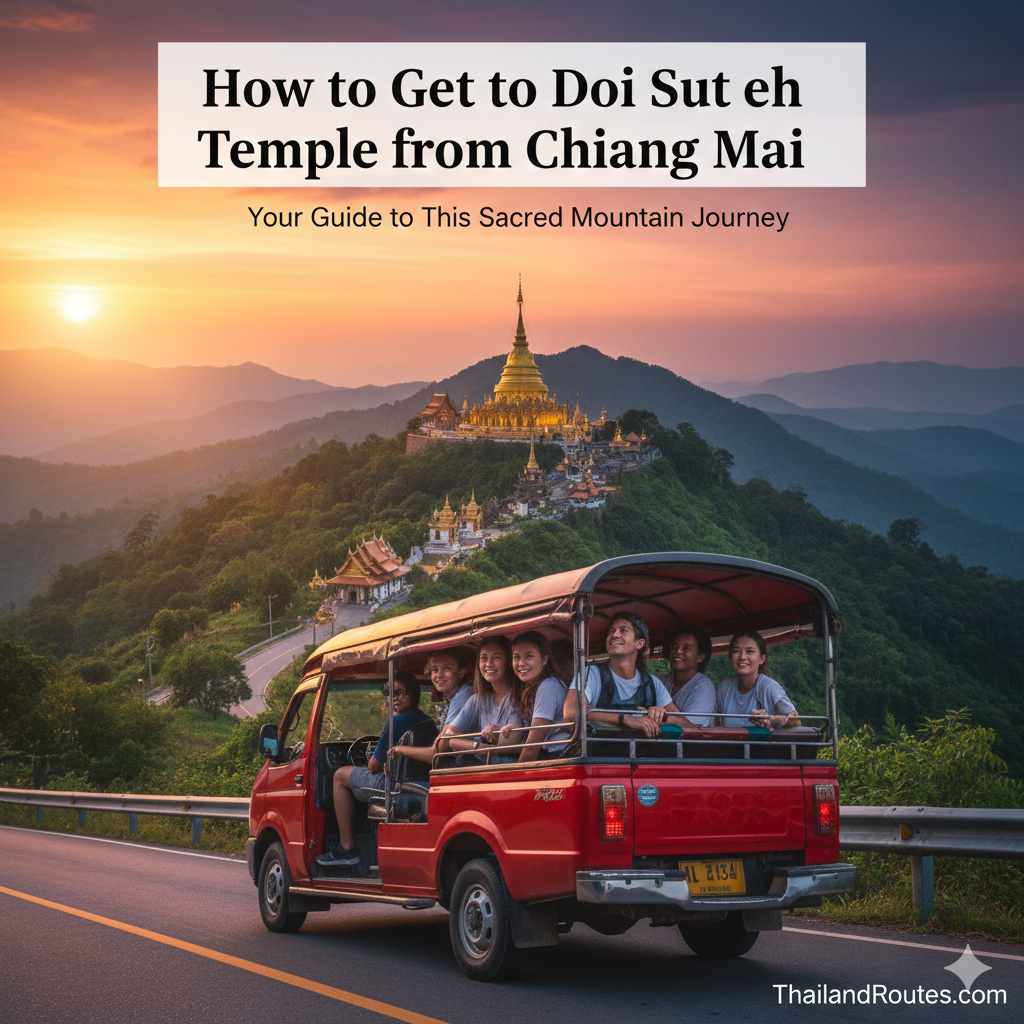
Visiting Chiang Mai’s Most Iconic Temple
If there’s one place that defines Chiang Mai, it’s Wat Phra That Doi Suthep. Perched high on Doi Suthep mountain, overlooking the city below, this golden temple is one of the most sacred pilgrimage sites in Thailand. Its glistening chedi, panoramic views, and spiritual ambiance draw travelers from around the world.
But before you can enjoy the breathtaking views and temple bells, you need to get there. Unlike many temples in the Old City, Doi Suthep is about 15 km from downtown Chiang Mai — requiring some planning.
This guide will explain every way to reach Doi Suthep, how long it takes, how much it costs, and tips to make your trip smooth and memorable.
1. Understanding Doi Suthep’s Location
Doi Suthep Temple is located on the slopes of Doi Suthep–Pui National Park, about 15 kilometers (9 miles) from Chiang Mai’s Old City.
- Elevation: approximately 1,050 meters above sea level.
- Road: a winding, paved mountain road with scenic forest views.
- Travel time: 30–45 minutes depending on transport and traffic.
The temple sits just below the peak of the mountain, which is also home to Doi Pui Village and a royal residence.
2. Best Times to Visit Doi Suthep
Before deciding how to get there, timing matters.
- Early morning (7:00–9:00 AM):
- Fewer tourists
- Cooler temperatures
- Chance to witness monks chanting or receiving alms
- Late afternoon (4:00–6:00 PM):
- Sunset views over Chiang Mai city
- Soft golden light on the temple
- Avoid mid-day:
- Hottest temperatures
- Busiest crowds
The temple is open daily from 6:00 AM to 8:00 PM, and visiting during quiet hours enhances the experience.
3. Option 1: Red Songthaew Truck (Shared Taxi) — Most Popular
The Songthaew (red truck) is the most budget-friendly and common way to get to Doi Suthep.
3.1 How It Works
- Songthaews leave from Chang Phuak Gate or the north side of the Old City.
- You can also flag one down anywhere near Nimman or the Old City.
- When there are enough passengers, the truck departs for the temple.
3.2 Travel Time
- Around 30–40 minutes depending on traffic and stops.
- The road winds uphill through the forest, so it’s scenic but slow.
3.3 Price
- 60–100 THB per person for a one-way shared ride.
- If you want the driver to wait for you and return, expect 100–200 THB round trip.
3.4 Pros
- Cheap and authentic local experience
- No need to book in advance
- Easy to find at popular pickup points
3.5 Cons
- You may need to wait until the truck fills up
- Limited space, no air-conditioning
- Not ideal for those prone to motion sickness
3.6 Insider Tip
If you want to avoid waiting, you can pay extra for a private charter (usually around 300–400 THB for the whole truck).
4. Option 2: Motorbike or Scooter Rental — Freedom & Flexibility
For adventurous travelers, renting a scooter or motorbike is a great way to enjoy the scenic ride up the mountain.
4.1 Travel Time
- 25–35 minutes from the Old City.
4.2 Cost
- Motorbike rental: 150–300 THB per day
- Fuel: about 50 THB for a round trip
4.3 Pros
- Total freedom to go at your own pace
- Ability to stop at Wat Pha Lat (a jungle temple) on the way up
- Beautiful viewpoints and forest scenery
4.4 Cons
- Requires driving confidence on winding mountain roads
- Not recommended in rainy season
- You must park below the temple and walk or take the elevator
4.5 Tips for Riders
- Wear a helmet (it’s mandatory).
- Avoid speeding — there are sharp curves.
- Bring a light jacket for the cooler mountain air.
- Go early to avoid heavy traffic.
5. Option 3: Tuk-Tuk — Private but Pricey
Tuk-tuks are an iconic part of Thailand’s transport scene, but they are less common for Doi Suthep because of the long uphill ride.
5.1 Travel Time
- 30–40 minutes one way.
5.2 Cost
- 400–600 THB round trip, depending on negotiation.
5.3 Pros
- Private transport — no waiting for other passengers.
- Unique travel experience.
5.4 Cons
- No air conditioning.
- Less comfortable for steep mountain roads.
- More expensive than songthaews.
Tip: Always agree on the price before departing.
6. Option 4: Taxi or Grab — Comfort & Convenience
If you prefer comfort or are traveling with a group, taking a taxi or ride-hailing service like Grab is a great option.
6.1 Travel Time
- 25–35 minutes one way.
6.2 Cost
- 400–700 THB round trip, depending on time and traffic.
6.3 Pros
- Air-conditioned and private.
- No waiting for other passengers.
- Perfect for families or groups.
6.4 Cons
- More expensive.
- Drivers may charge extra for waiting time.
Pro Tip: Negotiate a round-trip fare with waiting time at the temple (usually 1–1.5 hours).
7. Option 5: Guided Tours — Stress-Free
If you prefer everything arranged for you, many tour agencies offer half-day trips to Doi Suthep, often combined with other attractions.
7.1 What’s Included
- Transport from your hotel
- English-speaking guide
- Entrance fee
- Sometimes a stop at Wat Pha Lat or a hill tribe village
7.2 Travel Time
- 30–40 minutes each way
- Total tour length: 3–4 hours
7.3 Cost
- 400–1,000 THB per person, depending on the package.
7.4 Pros
- No planning required.
- Learn about the temple’s history and Buddhist practices.
- Hotel pickup and drop-off.
7.5 Cons
- Fixed schedule.
- Less flexibility to explore on your own.
8. Hike to Doi Suthep — For Adventurous Travelers
For those who love nature, there’s also a hiking trail from Wat Pha Lat to Doi Suthep.
8.1 Distance and Time
- 6 km uphill
- 1.5–2.5 hours depending on your pace
8.2 Trail Info
- The hike starts near Chiang Mai Zoo and goes through lush jungle.
- Well-marked but steep in sections.
- Not recommended during the rainy season.
8.3 Cost
- Free, except for water and snacks you bring along.
- You can take a songthaew down afterward if you don’t want to hike both ways.
8.4 Pros
- Immersive nature experience
- Breathtaking views
- Great workout!
8.5 Cons
- Requires good fitness.
- No facilities along the way.
9. Travel Time Comparison Table
| Transportation Method | Travel Time | Cost (One Way) | Comfort | Flexibility | Notes |
|---|---|---|---|---|---|
| Songthaew (shared) | 30–40 min | 60–100 THB | ★★☆☆☆ | ★★☆☆☆ | Budget option, may wait for others |
| Motorbike/Scooter | 25–35 min | 50–100 THB | ★★★☆☆ | ★★★★★ | Scenic but requires experience |
| Tuk-Tuk (private) | 30–40 min | 200–300 THB | ★★★☆☆ | ★★★★☆ | Unique ride, negotiate price |
| Taxi/Grab (private) | 25–35 min | 200–350 THB | ★★★★★ | ★★★★★ | Comfortable & fast |
| Guided Tour | 30–40 min | 400–1,000 THB | ★★★★☆ | ★★☆☆☆ | Includes guide & pickup |
| Hike | 90–150 min | Free | ★★☆☆☆ | ★★★★☆ | Beautiful jungle route |
10. What to Expect Upon Arrival
Once you arrive at the temple:
10.1 The Staircase
To reach the main temple, you must climb 306 steps, flanked by naga (serpent) sculptures. It’s steep but beautiful.
- Alternatively, there’s an elevator for 20 THB if you prefer not to climb.
10.2 Entrance Fee
- 50 THB for foreign visitors
- Free for Thai nationals
10.3 Dress Code
- Shoulders and knees must be covered.
- No hats or shoes inside the temple buildings.
- Sarongs are available for rent near the entrance.
10.4 Things to See
- Golden stupa (chedi) at the center
- Panoramic city view terrace
- Bell courtyard and shrines
- Chanting monks and local devotees
11. Best Time of Day to Go
| Time of Day | Advantages | Disadvantages |
|---|---|---|
| Morning (7–9 AM) | Cool weather, quiet, spiritual atmosphere | Early wake-up required |
| Midday (11 AM–2 PM) | Easy transport, clear views | Hot, crowded |
| Afternoon (4–6 PM) | Sunset views, soft light | Return trip in light traffic |
| Evening (6–8 PM) | Magical atmosphere, fewer tourists | Fewer songthaews going back |
Insider tip: For the best experience, visit in the early morning or before sunset.
12. Additional Stops on the Way
12.1 Wat Pha Lat (Jungle Temple)
- Located halfway up the mountain.
- Peaceful, hidden gem surrounded by forest.
- Ideal for a quick stop if you’re riding a scooter or hiking.
12.2 Doi Pui Village
- Hmong hill tribe village beyond Doi Suthep.
- Small shops, cafes, gardens.
- Best for travelers with extra time.
13. Safety Tips
- Bring small cash. Many transport options don’t accept cards.
- Carry water. The mountain air can be dry.
- Watch the weather. Roads can get slippery in the rainy season.
- Stay hydrated and take breaks if hiking or climbing the stairs.
- Respect temple rules. This is an active place of worship.
14. Cultural Etiquette at Doi Suthep
- Dress modestly — no tank tops or short shorts.
- Remove shoes before entering temple buildings.
- Keep your voice low.
- Don’t touch Buddha statues.
- Women should avoid physical contact with monks.
- Don’t point your feet toward religious icons.
Respectful behavior goes a long way in enhancing your experience.
15. Recommended Itinerary for Visiting Doi Suthep
| Time | Activity |
|---|---|
| 7:30 AM | Depart from Old City (songthaew or scooter) |
| 8:15 AM | Arrive at Doi Suthep |
| 8:30–10:00 AM | Explore temple, enjoy views |
| 10:15 AM | Optional stop at Wat Pha Lat |
| 11:30 AM | Return to Chiang Mai for lunch |
If you prefer sunset, simply shift the schedule to late afternoon.
16. Festivals and Special Events
Visiting Doi Suthep during a festival is unforgettable:
- Visakha Bucha (May): Thousands of pilgrims walk up the mountain at night.
- Loy Krathong (November): Lanterns and candles make the temple glow.
- Songkran (April): Special blessings and offerings.
If your trip coincides with a festival, arrive early — crowds can be huge.
17. Why Doi Suthep Is More Than Just a Temple
Doi Suthep isn’t just a beautiful landmark — it’s a spiritual symbol of Chiang Mai.
- Historical significance: Founded in the 14th century, it houses a relic of the Buddha.
- Cultural importance: Locals visit regularly to pray, especially during festivals.
- Natural setting: Its forested mountain location makes it feel like a world apart from the bustling city.
Many travelers say their Doi Suthep visit becomes one of their most memorable experiences in Thailand.
18. Suggested Nearby Attractions
If you have extra time, pair your temple visit with nearby sites:
- Chiang Mai Zoo — at the base of the mountain.
- Chiang Mai University — quiet campus with a scenic lake.
- Huay Kaew Waterfall — small waterfall, great for a quick nature stop.
19. Quick FAQ
Q: How far is Doi Suthep from Chiang Mai Old City?
A: About 15 km (9 miles).
Q: How long does it take to get there?
A: 25–45 minutes depending on transport and traffic.
Q: What’s the cheapest way to go?
A: Shared songthaew (around 60 THB).
Q: What’s the best time to visit?
A: Early morning or late afternoon.
Q: Do I need a guide?
A: Not required, but guided tours provide useful historical context.
Q: Is there an entrance fee?
A: 50 THB for foreign visitors.
Conclusion: A Scenic Journey to a Sacred Place
Getting to Doi Suthep is more than just a trip — it’s part of the Chiang Mai experience. Whether you ride in a red truck with locals, glide up on a scooter through winding mountain roads, or hike the lush jungle trail, the journey itself is unforgettable.
Once you reach the top and see the golden chedi shimmering in the sunlight with Chiang Mai stretching out below, you’ll understand why this temple is revered by locals and visitors alike.
So plan your trip wisely, choose the transportation that fits your style, and let Doi Suthep show you the spiritual heart of Northern Thailand.
Leave a Reply