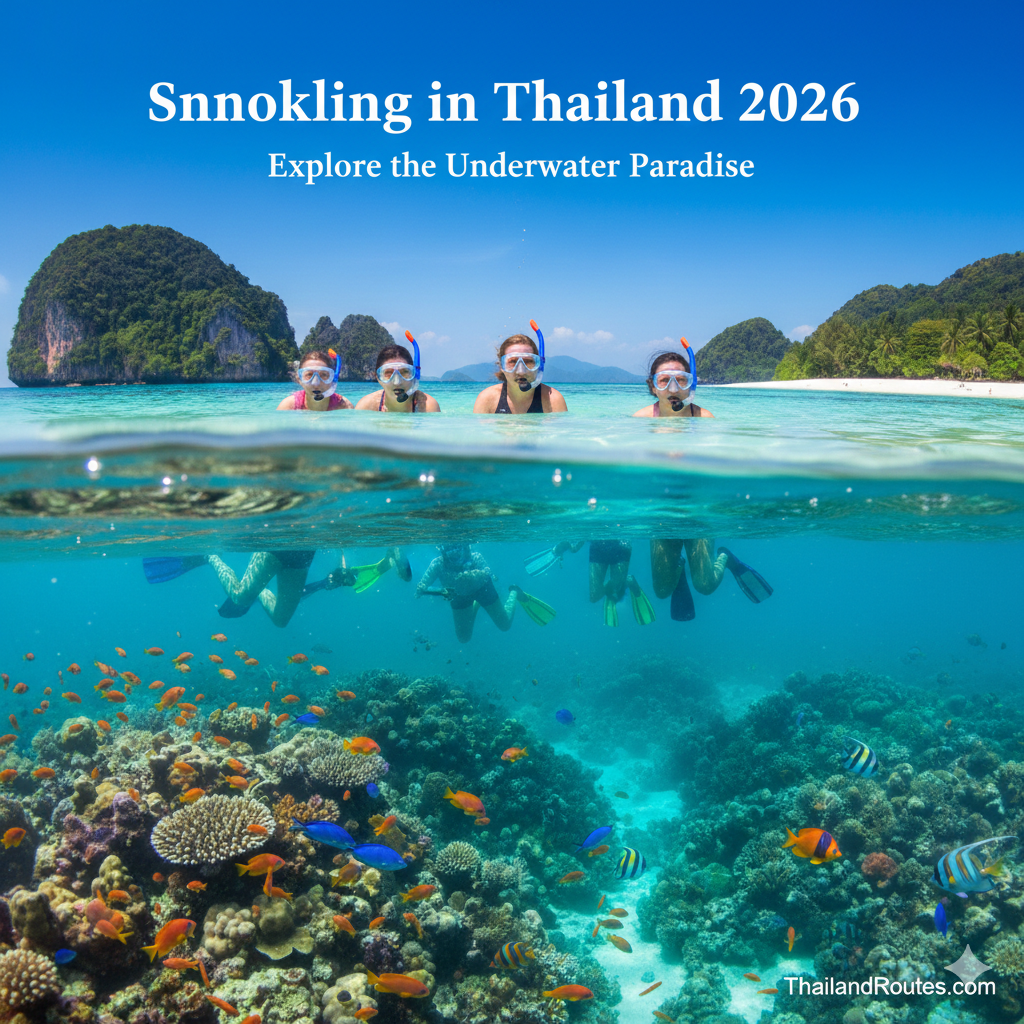
Why Thailand Is a Snorkeling Paradise
Few places on Earth offer such a perfect combination of turquoise waters, vibrant coral reefs, and abundant marine life as Thailand. The country’s islands and coastlines stretch across the Andaman Sea and the Gulf of Thailand—two of the most biodiverse marine regions in Asia.
In 2026, snorkeling remains one of Thailand’s most popular outdoor activities. Whether you’re a first-time snorkeler or an experienced underwater explorer, the country offers exceptional spots where clear water meets colorful coral gardens and schools of tropical fish.
This comprehensive guide explores everything you need to know about snorkeling in Thailand: the best destinations, what to expect underwater, the best time to go, costs, safety tips, and how to snorkel sustainably.
Why Snorkeling in Thailand Is Special
Thailand’s tropical climate, calm waters, and abundant marine ecosystems make it one of the best snorkeling destinations in the world.
Here’s why:
- Warm water all year: Temperatures typically range from 27–30°C (80–86°F).
- Excellent visibility: Often between 10 and 30 meters depending on the season.
- Rich marine biodiversity: Coral reefs, tropical fish, sea turtles, reef sharks, and more.
- Easy accessibility: Many snorkeling sites are close to shore or just a short boat ride away.
- Eco-friendly initiatives: Many national parks have enhanced coral protection programs by 2026.
Snorkeling in Thailand is not just about swimming—it’s about stepping into a living aquarium.
Best Time to Snorkel in Thailand
Snorkeling is possible year-round, but the best season depends on the coast you visit.
- Andaman Sea (Phuket, Phi Phi, Similan Islands): Best from November to April (dry season). Calm seas and top visibility.
- Gulf of Thailand (Koh Tao, Koh Samui, Koh Phangan): Best from May to September, when this side of the country has clearer water.
- Low season: Fewer crowds and lower prices, but occasional rain and reduced visibility in some areas.
To maximize your snorkeling experience, aim for mornings when the water is calmest and visibility is highest.
Top Snorkeling Destinations in Thailand 2026
1. **Similan Islands – Pristine Marine Sanctuary
Located off the coast of Phang Nga Province, the Similan Islands are widely regarded as one of the best snorkeling destinations in Southeast Asia.
Highlights:
- Crystal-clear waters with visibility up to 30 meters.
- Vibrant coral reefs, sea turtles, reef sharks, and clownfish.
- Protected as a national park with strict conservation rules.
Best Time: November to April
Good for: Intermediate and experienced snorkelers who want exceptional underwater landscapes.
2. **Koh Phi Phi – Iconic Island Snorkeling
Phi Phi’s surrounding waters are famous for their incredible clarity and marine life. While some areas are busy, 2026 brings stricter visitor limits to protect the reefs.
Highlights:
- Coral gardens around Maya Bay and Loh Sama Bay.
- Parrotfish, blacktip reef sharks, sea anemones, and clownfish.
- Easy access from Phuket or Krabi.
Best Time: November to April
Good for: Beginners and experienced snorkelers.
3. **Koh Tao – Thailand’s Snorkeling Capital
Known as one of Asia’s top dive destinations, Koh Tao is equally famous for snorkeling. Its calm, shallow bays are perfect for beginners, while its offshore reefs satisfy experienced explorers.
Highlights:
- Excellent visibility and easy shore access.
- Green sea turtles, butterflyfish, and vibrant hard corals.
- Protected bays like Shark Bay and Ao Leuk Bay.
Best Time: May to September
Good for: All levels.
4. **Koh Lipe – Remote and Spectacular
Located near the Malaysian border, Koh Lipe is part of the Tarutao National Marine Park. It’s less crowded than Phi Phi, with incredible biodiversity.
Highlights:
- Calm lagoons with soft coral gardens.
- Whale sharks (seasonal), manta rays, and turtles.
- Ideal conditions for snorkeling right from the beach.
Best Time: November to April
Good for: Travelers seeking quieter, pristine waters.
5. **Koh Samui and Koh Phangan – Easy Island Snorkeling
These popular islands in the Gulf of Thailand offer plenty of snorkeling tours and beginner-friendly spots.
Highlights:
- Accessible reefs near Koh Tao.
- Easy boat trips and half-day tours.
- Calm, shallow waters ideal for families.
Best Time: May to September
Good for: Beginners, families, casual travelers.
6. **Surin Islands – Cultural and Natural Experience
Famous for its crystal-clear waters and being home to the Moken “sea gypsy” community, the Surin Islands are ideal for travelers seeking both culture and marine beauty.
Highlights:
- Shallow coral reefs teeming with marine life.
- Eco-conscious tourism initiatives.
- Cultural tours with the Moken community.
Best Time: November to April
Good for: Eco-travelers and snorkelers seeking authenticity.
What You’ll See Underwater
Thailand’s coral reefs are home to thousands of species. While sightings vary by location and season, common marine life includes:
- Tropical fish: Clownfish, parrotfish, butterflyfish, angelfish, lionfish.
- Reef dwellers: Sea cucumbers, sea stars, nudibranchs, moray eels.
- Larger creatures: Sea turtles, blacktip reef sharks (harmless), whale sharks (rare but possible in Koh Tao or Similan Islands).
- Coral: Hard and soft corals, anemones, sea fans, and sponges.
The best snorkeling experiences come when you move slowly, stay calm, and let the underwater world reveal itself.
Types of Snorkeling Experiences
Shore Snorkeling
Many Thai beaches have coral reefs just offshore. This is ideal for beginners or travelers on a budget. Popular for families and solo travelers alike.
Boat Snorkeling Tours
Most islands offer half-day or full-day boat tours to multiple snorkeling spots. These include guided excursions, equipment, and sometimes lunch.
Liveaboard Trips
For advanced enthusiasts, liveaboard tours (multi-day trips) in places like Similan or Surin Islands offer access to remote reefs and marine parks.
Snorkeling Costs in Thailand 2026
| Snorkeling Type | Cost (THB) | Includes |
|---|---|---|
| Beach / Shore Snorkeling | Free–500 THB | Equipment rental (mask, snorkel, fins) |
| Half-Day Boat Tour | 800–1,500 THB | Boat, equipment, guide, sometimes lunch |
| Full-Day Boat Tour | 1,500–3,000 THB | Multiple sites, lunch, gear, national park fees |
| Liveaboard (2–4 days) | 8,000–25,000 THB | Accommodation, meals, multiple snorkeling sites |
| Equipment Purchase | 1,000–3,000 THB | Personal mask, snorkel, fins |
Prices vary depending on location, season, and operator.
Snorkeling Equipment
Basic Gear:
- Mask & Snorkel: Ensures a clear view and easy breathing.
- Fins: Optional but helpful for stronger swimming and less fatigue.
- Rash Guard or Swim Shirt: Protects from sunburn and jellyfish.
- Reef-Safe Sunscreen: Required in many marine parks to protect coral.
Renting equipment is easy across most islands, but serious snorkelers often bring their own for better comfort and fit.
Safety Tips for Snorkeling in Thailand
- Always wear a flotation device if you’re not a strong swimmer.
- Snorkel with a buddy or as part of a tour.
- Be aware of currents, especially near open water.
- Do not touch or step on coral. Coral is fragile and can be damaged easily.
- Avoid feeding marine life. It disrupts natural behaviors.
- Use reef-safe sunscreen. Chemical sunscreens harm coral ecosystems.
- Respect national park rules.
Thailand’s waters are generally safe for snorkeling, but awareness and responsibility are key.
National Parks and Conservation Rules
Many top snorkeling areas are within marine national parks, which have specific regulations to protect fragile ecosystems.
Common rules in 2026:
- No anchoring boats on coral reefs.
- Limited daily visitors to sensitive sites.
- Prohibition of single-use plastics.
- Mandatory entrance fees (100–400 THB for foreigners).
- Seasonal closures in some areas to allow coral recovery.
This conservation-based approach has greatly improved reef health over the past few years.
Sustainable Snorkeling in 2026
With the rise of eco-tourism, Thailand has become more focused on sustainable snorkeling practices.
What you can do as a traveler:
- Choose eco-certified tour operators.
- Bring your own reusable water bottle.
- Avoid touching marine life or collecting shells.
- Support marine conservation projects.
- Travel during off-peak hours to reduce overcrowding.
By practicing responsible snorkeling, travelers play a part in preserving Thailand’s underwater treasures.
Popular Snorkeling Tours in 2026
- Phi Phi Island Day Tour: Snorkel at Maya Bay and Loh Sama Bay.
- Koh Tao Reef Explorer: Visit Shark Bay and Ao Leuk Bay.
- Similan Island Marine Park Tour: Multi-site snorkeling day trip.
- Surin Island Eco-Tour: Includes cultural interaction with local communities.
- Koh Lipe Coral Trail: Guided eco-snorkeling tour.
Most tours include round-trip transfers, equipment, lunch, and a guide.
Accommodation Near Snorkeling Spots
Many travelers choose to stay directly on or near snorkeling beaches. Popular options in 2026 include:
- Phuket: Beachfront resorts near Kata and Ao Sane Beach.
- Koh Phi Phi: Mid-range hotels near Loh Dalum Bay.
- Koh Tao: Budget-friendly hostels and boutique resorts near Mae Haad.
- Koh Lipe: Eco-resorts and guesthouses close to Sunrise Beach.
- Similan/Surin Islands: Liveaboard boats or limited eco-lodges.
Booking early is recommended during high season.
Snorkeling for Families and Beginners
Thailand is especially beginner-friendly:
- Calm, shallow lagoons in Koh Tao, Koh Samui, and Phuket.
- Equipment rental everywhere.
- Life vests and guided tours.
- Marine life visible just a few meters from the beach.
Many tours are designed for families, with easy access and child-friendly guides.
Hidden Gems: Off-the-Beaten-Path Snorkeling Spots
If you want to escape the crowds, consider:
- Koh Rok (near Krabi): Crystal waters, soft corals, and fewer tourists.
- Koh Kradan: A tranquil island in Trang Province.
- Koh Yao Noi: Close to Phuket but much quieter.
- Koh Bulon Leh: Ideal for those seeking an authentic island vibe.
These destinations offer equally stunning marine life with a more relaxed atmosphere.
Common Marine Life Encounters in Thailand
| Species | Where to See | Notes |
|---|---|---|
| Clownfish | Koh Phi Phi, Koh Tao | Often found in sea anemones |
| Green Sea Turtles | Koh Tao, Similan Islands | Calm and curious but must not be touched |
| Blacktip Reef Sharks | Phi Phi, Koh Tao | Harmless and shy |
| Parrotfish and Angelfish | Throughout Thailand | Brightly colored reef fish |
| Whale Sharks (seasonal) | Similan Islands, Koh Tao | Rare, usually in March–May |
| Hard and Soft Corals | All major snorkeling sites | Fragile — look but don’t touch |
Health and Safety Considerations
- Wear a rash guard or UV shirt to avoid sunburn.
- Bring a waterproof dry bag for valuables.
- If prone to seasickness, take medication before boat trips.
- Stay hydrated and avoid overexertion.
- In rare cases, jellyfish may be present — follow guide instructions.
Thailand’s snorkeling destinations are well-equipped with safety protocols, and most tours include trained guides and flotation devices.
Suggested 3-Day Snorkeling Itinerary (Andaman Coast Example)
Day 1: Phuket
- Morning: Shore snorkeling at Ao Sane Beach.
- Afternoon: Explore Kata Beach reefs.
- Evening: Relax and enjoy beachfront dining.
Day 2: Phi Phi Islands
- Morning: Ferry to Phi Phi.
- Midday: Guided snorkeling at Maya Bay and Loh Sama Bay.
- Evening: Sunset walk on the beach.
Day 3: Similan Islands
- Full-day boat tour with multiple snorkeling stops.
- Observe turtles and coral gardens.
- Return to Phuket in the evening.
This itinerary provides a balanced mix of accessibility and world-class marine experiences.
Frequently Asked Questions
Q: Do I need to be a good swimmer to snorkel in Thailand?
A: No. Many snorkeling tours offer life vests, and some reefs are in shallow water.
Q: Is snorkeling safe in Thailand?
A: Yes. Waters are calm in most tourist areas, and tour operators prioritize safety.
Q: Can I bring my own equipment?
A: Absolutely. Many experienced snorkelers prefer their own gear for comfort.
Q: Are there dangerous marine animals?
A: Encounters with dangerous animals are extremely rare. Blacktip reef sharks are harmless, and jellyfish are uncommon in popular areas.
Q: Do I need to book tours in advance?
A: It’s recommended during high season, but walk-in bookings are often available.
Conclusion: A Window into Thailand’s Marine Magic
Snorkeling in Thailand is more than just a fun activity—it’s a gateway to some of the most vibrant and diverse underwater ecosystems in Asia. With crystal-clear waters, stunning coral reefs, and accessible sites for all experience levels, it’s no wonder this activity remains a highlight for travelers year after year.
By 2026, Thailand has not only maintained but also improved the health of its coral reefs through eco-tourism and sustainable marine park policies. Whether you’re floating over shallow reefs in Koh Tao or exploring the remote Similan Islands, you’re guaranteed an unforgettable encounter with nature.
Leave a Reply