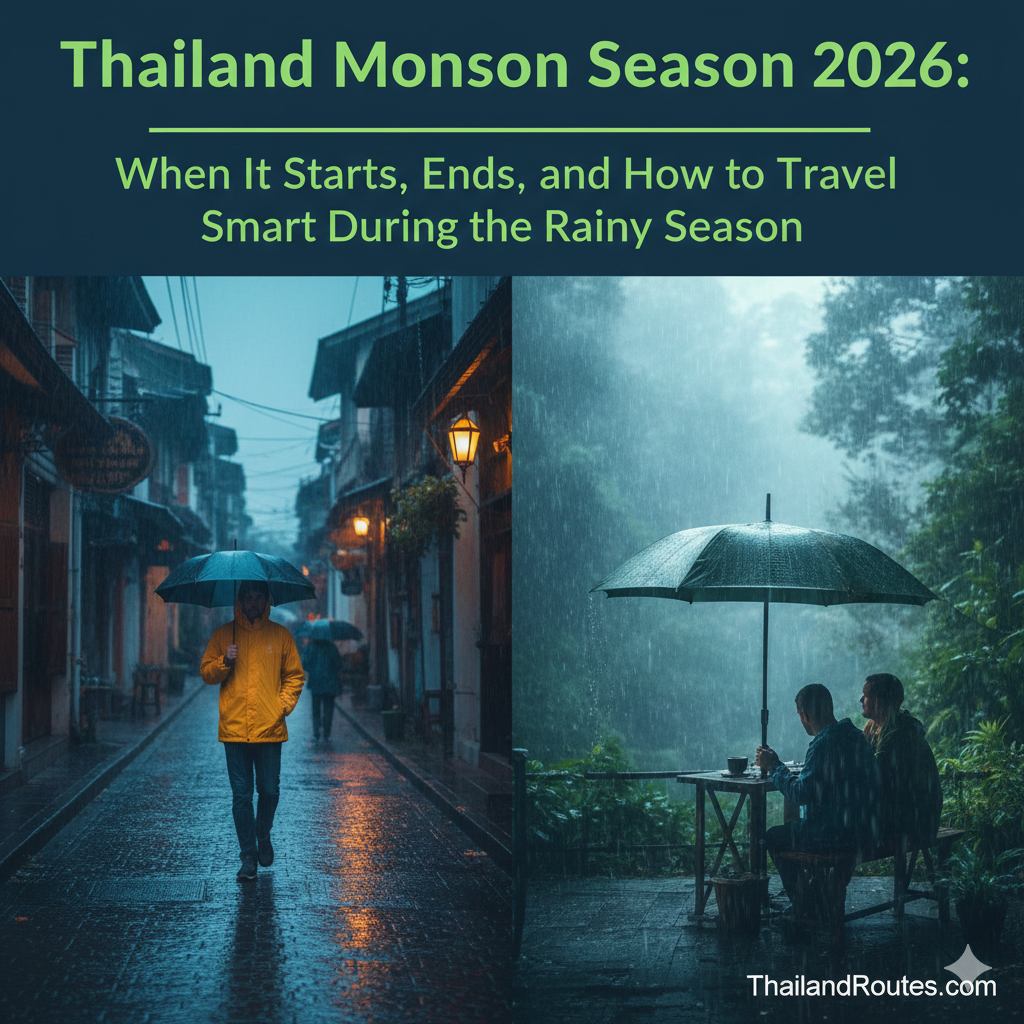
Understanding Thailand’s Monsoon Season
Thailand is a tropical paradise visited by millions of travelers every year. Its white-sand beaches, vibrant cities, lush jungles, and warm hospitality make it a favorite destination in Asia. But like all tropical countries, Thailand has a monsoon season—a period of heavy rainfall that shapes the country’s weather patterns.
Many travelers mistakenly think monsoon season means “non-stop rain,” but that’s not entirely true. In most parts of Thailand, the rainy season is characterized by short, intense showers followed by sunshine, not constant downpours. In fact, traveling during the monsoon can be an excellent choice—if you plan smartly.
This comprehensive 2026 guide will help you understand exactly when the monsoon season starts and ends in Thailand, how it affects different regions, what to expect in terms of weather, and practical tips for enjoying your trip during the rainy months.
1. What Is the Monsoon Season in Thailand?
The monsoon season, also known as the wet season, is driven by the Southwest Monsoon—a seasonal wind pattern that brings moist air from the Indian Ocean across the country. This results in regular rain showers, higher humidity, and lush green landscapes.
Key features of Thailand’s monsoon season:
- Heavy but often brief rain showers.
- High humidity levels.
- Cooler temperatures compared to peak summer.
- Greener landscapes and fewer tourists.
The monsoon season starts at different times in different regions, but generally runs from May to October.
2. When Does the Monsoon Season Start and End in Thailand?
The start and end of the rainy season in Thailand vary slightly depending on the region.
| Region | Start of Monsoon | End of Monsoon | Peak Rain Months |
|---|---|---|---|
| Central Thailand (Bangkok) | Mid-May | Late October | August–September |
| Northern Thailand (Chiang Mai) | Early May | Late October | August–September |
| Southern Thailand (West Coast – Phuket, Krabi) | May | October | June–August |
| Southern Thailand (East Coast – Koh Samui) | October | January (next year) | November–December |
This regional difference is crucial when planning your trip. While it may be raining in Phuket, it can be sunny in Koh Samui, and vice versa.
3. Monsoon Season in Bangkok and Central Thailand
Bangkok, located in central Thailand, experiences a typical tropical monsoon climate.
- Start: Mid-May
- End: Late October
- Peak Rainfall: August and September
Rain usually comes in short bursts during the late afternoon or evening. Flooding can occur in low-lying areas, but it usually clears quickly.
Travel Tip: Carry a lightweight umbrella or rain poncho, and plan your sightseeing earlier in the day. Tourist attractions and street food markets remain open throughout the monsoon.
4. Monsoon Season in Northern Thailand
Chiang Mai and Chiang Rai, located in northern Thailand, experience their wet season slightly earlier.
- Start: Early May
- End: Late October
- Peak: August and September
The rains bring cooler temperatures and transform the mountains and countryside into lush green scenery. This is an excellent time for nature lovers, photographers, and slow travelers.
Travel Tip: Road conditions in rural areas can be slippery, so if you plan to go trekking, choose reputable guides and wear proper footwear.
5. Monsoon Season on the Andaman Coast (West Coast)
The Andaman Coast, home to popular destinations like Phuket, Krabi, Phi Phi Islands, and Khao Lak, experiences heavier and more prolonged rainfall compared to other parts of Thailand.
- Start: May
- End: October
- Peak: June to August
During peak monsoon, some boat services to islands may be canceled due to rough seas. However, prices for hotels and tours drop significantly.
Travel Tip: If you don’t mind occasional rain and want to avoid crowds, this can be a great time to visit Phuket and Krabi. Always check ferry schedules and weather forecasts.
6. Monsoon Season on the Gulf Coast (East Coast)
The Gulf of Thailand, including Koh Samui, Koh Phangan, and Koh Tao, has a different rainy season than the rest of the country.
- Start: October
- End: January (next year)
- Peak: November and December
This means Koh Samui often has sunny weather when the rest of the country is rainy—and vice versa.
Travel Tip: If you want to travel during Thailand’s wettest months (June to September), the Gulf Coast is a smart choice to avoid the heaviest rains.
7. Weather Characteristics During the Monsoon
The monsoon doesn’t mean endless rain. Typical weather patterns during this season include:
- Short, intense showers: Usually late afternoon or evening.
- Occasional full-day rain: More common during peak months.
- Warm temperatures: Average highs between 25–32°C (77–90°F).
- High humidity: Around 70–90%.
- Lush landscapes: Perfect for nature lovers and photographers.
The air tends to feel fresher after a rainstorm, making it surprisingly pleasant for travel.
8. Benefits of Traveling During Monsoon Season
Many travelers avoid the monsoon, but it actually offers unique advantages.
1. Fewer Tourists
Popular destinations like Phuket, Chiang Mai, and Bangkok are less crowded, allowing you to enjoy a more peaceful experience.
2. Lower Prices
Flights, hotels, and tours are often cheaper—sometimes by 30–50%. It’s a great time for budget travelers.
3. Lush Green Landscapes
Rain transforms Thailand into a vibrant, green paradise. National parks, waterfalls, and rice fields are at their most beautiful.
4. Cooler Temperatures
While it’s still warm, monsoon rains help lower daytime temperatures slightly compared to the hot season.
9. Drawbacks of Traveling During Monsoon Season
Of course, the monsoon season has its challenges too.
- Sudden weather changes: Rain can disrupt plans, especially island hopping.
- Transportation delays: Flights or boats may be rescheduled.
- Higher humidity: Can be uncomfortable for some travelers.
- Mosquitoes: Increased standing water can mean more insects.
These are manageable with proper planning and realistic expectations.
10. Best Destinations to Visit During Monsoon Season
Some areas shine during the rainy months.
Koh Samui and Gulf Islands
While the west coast gets heavy rain, the east coast stays sunny from May to September. This makes it a top choice for monsoon travelers.
Chiang Mai and Northern Thailand
The countryside becomes a green wonderland. It’s a fantastic time for trekking, photography, and cultural exploration.
Bangkok
Rain showers are short and manageable, and the city offers countless indoor attractions like temples, malls, and museums.
11. Destinations to Avoid During Heavy Rain Months
- Some Andaman islands (like Koh Phi Phi or Similan Islands) may have limited ferry services during peak monsoon.
- Trekking in rural northern areas may be restricted if trails become muddy or unsafe.
- Certain national parks may close temporarily due to landslide risks.
Always check local conditions before traveling to remote destinations during monsoon.
12. Practical Tips for Traveling During the Monsoon Season
1. Pack Smart
- Lightweight rain jacket or poncho
- Waterproof shoes or sandals
- Quick-dry clothing
- Travel umbrella
- Dry bags to protect electronics
2. Plan Flexible Itineraries
Allow extra time for transportation and activities in case of weather disruptions.
3. Check the Forecast
Thai Meteorological Department provides reliable weather updates.
4. Book Accommodations in Advance
Even in the rainy season, some popular hotels can fill up quickly with travelers seeking deals.
5. Use Trusted Transportation
Stick to reliable airlines, buses, and boat companies that prioritize safety during bad weather.
13. Safety Considerations During Monsoon
Monsoon travel is generally safe, but a few precautions help:
- Avoid swimming in the sea during strong waves or storm warnings.
- Stay away from cliff edges or waterfalls after heavy rain.
- Follow local advice regarding park or trail closures.
- Use mosquito repellent to prevent bites.
Thailand is well-equipped for heavy rains, and disruptions are usually short-lived.
14. Monsoon Season Festivals and Cultural Experiences
Rain doesn’t stop Thailand’s cultural calendar—in fact, some of the most unique festivals happen during the monsoon.
- Phi Ta Khon Festival (June–July): A colorful ghost festival in northeastern Thailand.
- Khao Phansa (Buddhist Lent): Begins in July. Monks retreat to temples during the rains, and visitors can witness special ceremonies.
- Vegetarian Festival (October): Particularly vibrant in Phuket, with processions and food stalls.
These festivals offer authentic experiences without peak-season crowds.
15. Outdoor Activities During Monsoon Season
Contrary to popular belief, many outdoor activities remain enjoyable during the rainy months.
- Trekking and nature tours in Chiang Mai and the north.
- Temple visits in Bangkok and historical cities like Ayutthaya.
- Beach walks and swimming on calmer days in the Gulf Coast.
- Cooking classes and cultural workshops as indoor options during rain showers.
Early mornings often have clear skies, so planning activities before noon is a smart strategy.
16. Wildlife and Natural Beauty
The monsoon season brings nature to life in Thailand.
- National parks are greener and waterfalls are at their most spectacular.
- Birds and wildlife are more active.
- Rice fields turn vibrant green, creating breathtaking scenery.
Destinations like Khao Sok National Park are especially beautiful during this season.
17. Health and Comfort Tips
- Stay hydrated: Humidity can make you sweat more.
- Mosquito protection: Bring repellent, especially in jungle areas.
- Light clothing: Choose breathable fabrics to stay cool.
- Carry spare clothes: Sudden downpours can leave you wet.
Many travelers find monsoon weather refreshing compared to Thailand’s intense dry-season heat.
18. Budget Travel Advantages During Monsoon
If you’re traveling on a budget, the rainy season is your best friend.
- Hotels and resorts offer discounts of 30–50%.
- Flights and tours are cheaper.
- Attractions are less crowded, allowing for more personalized experiences.
- Long-stay travelers get even better deals.
This makes monsoon season ideal for backpackers and digital nomads.
19. Myths About Monsoon Season
Myth 1: “It rains all day.”
Reality: Most rain falls in short bursts, often late in the day.
Myth 2: “Everything is closed.”
Reality: Major attractions and cities remain fully open.
Myth 3: “It’s dangerous to travel during monsoon.”
Reality: With planning, it’s safe and often more enjoyable.
Myth 4: “The beaches are ruined by rain.”
Reality: Many beaches are still beautiful—and less crowded.
20. Final Thoughts: Embracing Thailand’s Monsoon Season
The monsoon season in Thailand starts around May and ends in October for most of the country, except the Gulf Coast, where it runs from October to January. Instead of seeing this season as a travel obstacle, consider it an opportunity.
You’ll experience lush green scenery, lower prices, fewer crowds, and a more authentic connection to Thai life. With the right preparation—waterproof gear, flexible plans, and weather awareness—you can enjoy Thailand during the rainy months just as much as the dry season.
Whether you’re wandering through Bangkok’s markets in the rain, exploring misty mountain temples in Chiang Mai, or enjoying quiet beaches on Koh Samui, the monsoon brings its own unique beauty.
In 2026, Thailand’s monsoon season isn’t a reason to postpone your trip—it’s a chance to experience the country in a whole new light.
Leave a Reply