Understanding the Heart of Thailand
Thailand is known around the world for its warm hospitality, stunning landscapes, flavorful cuisine, and spiritual serenity. But beneath the tropical beauty lies a rich cultural fabric woven from centuries of tradition, religion, and social values.
Understanding Thai culture isn’t just polite—it’s essential for anyone visiting, working, or living in the country. In 2026, as Thailand continues to welcome millions of international visitors and long-term residents, respecting local customs remains one of the most important ways to build meaningful connections.
Thai culture places a strong emphasis on respect, harmony, and social awareness. Small gestures can make a big difference in how you are perceived. This guide explores Thai culture and etiquette in detail: greetings, dress codes, temple manners, communication styles, daily life customs, and what not to do.
1. Foundations of Thai Culture
Buddhism as a Cultural Backbone
The majority of Thais practice Theravada Buddhism, which influences many aspects of daily life, from holidays to family structures and social behaviors. Temples (called wats) are not only places of worship but also centers of community life.
Core Buddhist values such as kindness, patience, humility, and respect for elders are deeply embedded in Thai society.
The Role of the Monarchy
Respect for the Thai monarchy is another cornerstone of Thai identity. The royal family is held in extremely high regard, and insulting or disrespecting them is a serious offense under Thai law.
Harmony Over Confrontation
Thai culture values social harmony. Open conflict, anger, or direct criticism is generally avoided. People prefer calm, indirect communication that maintains everyone’s dignity.
2. Greetings and Social Etiquette
The Traditional Thai Greeting – “Wai”
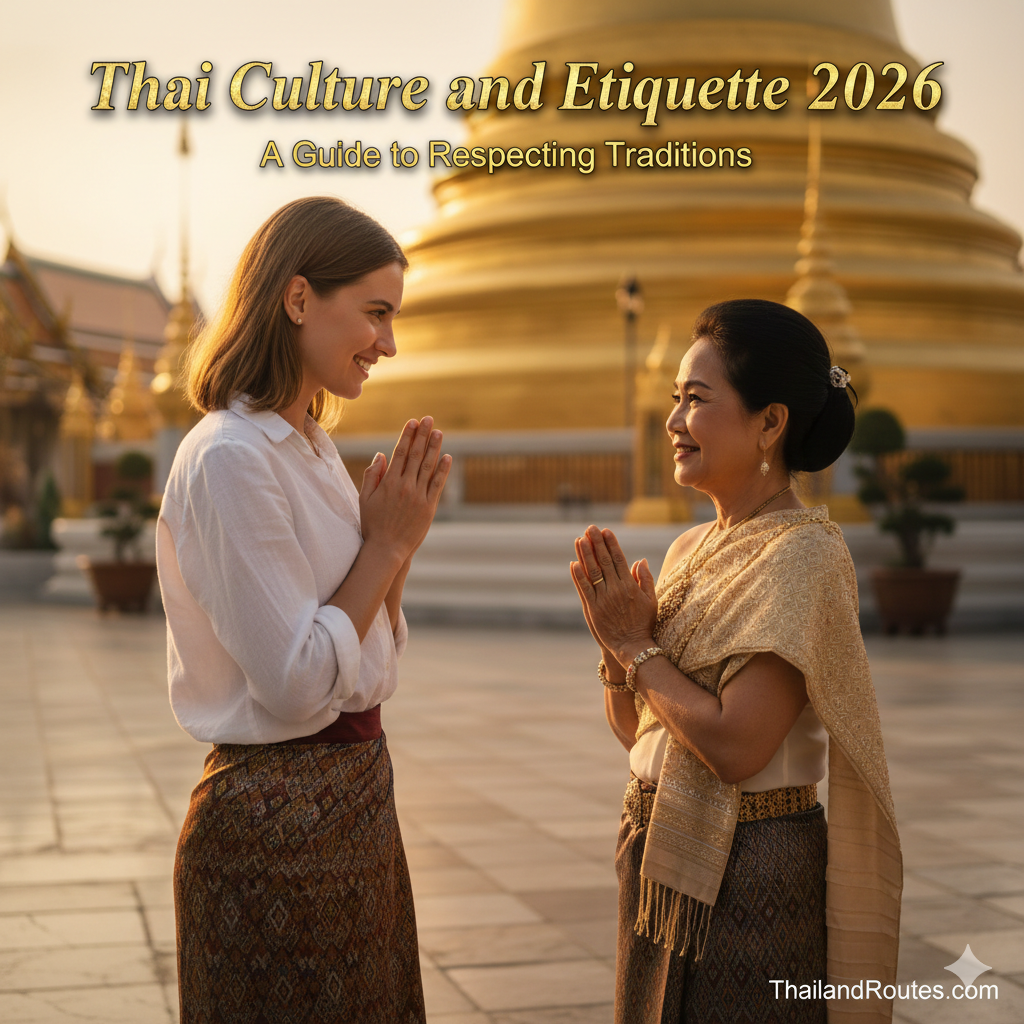
The wai is a gesture of respect made by pressing your palms together in a prayer-like position and slightly bowing your head.
- The higher the hands are placed, the more respect is shown.
- A wai is typically used when greeting, thanking, apologizing, or saying goodbye.
- Foreigners are not always expected to initiate a wai, but returning one is a sign of good manners.
Addressing People
- First names are commonly used, often with the prefix “Khun” (Mr./Ms.), e.g., Khun Somchai.
- Titles and honorifics are important, especially when speaking to elders or authority figures.
Smiling
Thailand is called “The Land of Smiles” for a reason. Smiling is a cultural tool—used to express friendliness, smooth over awkward situations, and maintain harmony.
3. Body Language and Personal Space
Body language in Thailand carries deep meaning, sometimes more than words.
- Head: The head is considered the most sacred part of the body. Never touch anyone’s head, even as a friendly gesture.
- Feet: Feet are considered the lowest and “dirtiest” part of the body. Pointing your feet at someone, especially monks or Buddha statues, is considered disrespectful.
- Pointing: Avoid pointing directly at people. If necessary, gesture with an open hand.
- Public displays of affection: Modest behavior is valued. Hand-holding is acceptable for couples, but kissing or hugging in public is frowned upon.
- Physical distance: Thais are generally comfortable with close proximity in casual settings, but they value subtlety and respect.
4. Dress Codes and Appearance
Thailand may be hot, but modest dressing remains culturally important, especially in religious or formal settings.
Everyday Dressing
- In urban areas, casual but neat clothing is acceptable.
- Revealing clothes may be tolerated in tourist spots but can draw unwanted attention elsewhere.
Temple Visits
When visiting temples:
- Shoulders must be covered.
- Shorts, short skirts, and sleeveless tops are not appropriate.
- Remove hats and sunglasses.
- Clothing should be clean and respectful.
Professional Settings
Business attire is more formal than in some Western countries. Men often wear collared shirts and long pants, while women wear dresses, skirts, or slacks with modest tops.
5. Religious Etiquette and Temple Manners
Temples are central to Thai culture and deserve special respect.
Key Temple Etiquette
- Remove your shoes before entering temple buildings.
- Dress modestly and avoid loud behavior.
- Avoid touching Buddha statues. Taking photos is often allowed but should be done respectfully.
- Never sit with your feet pointing toward the Buddha image.
- Women should not touch monks. If offering something, it should be placed on a cloth or handed indirectly.
Photography
Always ask permission before taking photos, especially of monks or inside sacred spaces. Some temples may have restrictions.
6. Royal and National Symbols
The Thai monarchy is revered, and national symbols are treated with great respect.
- The National Anthem: Played daily at 8:00 AM and 6:00 PM in public spaces. Locals stop walking and stand in silence. Foreigners are expected to do the same.
- Royal portraits: Commonly displayed in public places and homes. Never make jokes or negative comments about the royal family.
- Currency: Thai banknotes have the King’s image. Stepping on money is considered deeply offensive.
7. Dining Etiquette in Thailand
Food is a cornerstone of Thai culture. Sharing meals is a communal experience.
At the Table
- Wait to be invited to sit.
- Dishes are often shared family-style.
- Use a spoon and fork. The fork is used to push food onto the spoon. Chopsticks are mainly used for noodles.
- Don’t stick your fork into shared dishes. Use the serving spoon provided.
Manners
- Don’t start eating until the eldest person at the table begins.
- Never waste food intentionally—it’s seen as disrespectful.
- Paying the bill is often handled by the host or the person who invited the group.
8. Communication Style
Thai communication is subtle, polite, and often indirect.
- “Mai pen rai” (“Never mind” or “It’s okay”) reflects a cultural tendency to avoid confrontation.
- Saying “no” directly can feel impolite; people may use soft refusals instead.
- Maintaining a calm tone of voice is valued, even during disagreements.
- Humor and smiling can diffuse tense moments.
9. Respect for Elders and Hierarchy
Thai society is structured around hierarchy and age.
- Elders are shown great respect in both family and public settings.
- The younger person typically initiates the wai greeting.
- Decisions are often deferred to senior figures in a group.
- Interrupting or speaking over elders is considered impolite.
10. Dos and Don’ts in Thai Culture
Dos
- Smile often—it communicates friendliness and openness.
- Dress appropriately, especially in religious or formal places.
- Remove shoes when entering homes or temples.
- Show respect to monks, elders, and authority figures.
- Speak softly and avoid raising your voice.
- Learn a few Thai phrases—it goes a long way.
Don’ts
- Don’t touch anyone’s head.
- Don’t point your feet at people or sacred objects.
- Don’t publicly criticize the royal family.
- Don’t show anger or frustration in public.
- Don’t step on currency.
- Don’t engage in public displays of affection in conservative areas.
11. Etiquette in Daily Life
Visiting Homes
- Bring a small gift when invited to someone’s home.
- Always remove your shoes before entering.
- Sit lower than the eldest person in the room if possible.
- Thank the host before leaving.
Using Public Transportation
- Offer your seat to monks, elderly passengers, and pregnant women.
- Speak quietly on the phone.
- Respect queueing etiquette.
Shopping and Bargaining
- Bargaining is common in markets but should be done politely.
- Smiling and friendliness often lead to better deals.
- In malls and chain stores, prices are fixed.
12. Gender Norms and Sensitivities
Thailand is generally tolerant, but cultural expectations around gender still play a role.
- Traditional gender roles are visible in many rural areas, though urban centers are more liberal.
- Modesty is valued for both men and women.
- LGBTQ+ communities are widely accepted in many areas, but respectful behavior remains expected in public spaces.
13. Festivals and Cultural Celebrations in 2026
Thailand’s calendar is filled with vibrant festivals, many of which are rooted in religion and seasonal cycles. Participating respectfully in these events is a wonderful way to understand Thai culture.
Songkran (Thai New Year)
- When: April
- What: A water festival symbolizing renewal and cleansing.
- Etiquette: Be respectful near temples and elders. Water throwing is for fun, not aggression.
Loy Krathong
- When: November
- What: Festival of lights, where people float decorated baskets on water to let go of negativity.
- Etiquette: Dress modestly, avoid littering waterways.
Visakha Bucha Day
- A Buddhist holiday celebrating the birth, enlightenment, and death of the Buddha. Alcohol sales are banned on this day.
14. Modern Influences and Changing Etiquette
By 2026, globalization and digitalization have influenced Thai culture—especially in big cities.
- More Thais speak English, making cultural exchange easier.
- Dress codes have become more relaxed in urban areas.
- Digital payments and QR codes have replaced cash in many places.
- Social media etiquette is becoming part of everyday manners.
Despite these changes, respect, kindness, and harmony remain central to Thai identity.
15. Business Etiquette in Thailand
For professionals, understanding workplace manners is essential.
- Punctuality shows respect.
- Business cards are exchanged with both hands.
- Hierarchy matters—address senior staff first.
- Conservative dress is preferred for meetings.
- Building relationships often precedes business deals.
16. Cultural Taboos and Sensitive Topics
- Politics: Discussions can be sensitive. Approach with caution.
- Monarchy: Never make jokes or disrespectful remarks.
- Religion: Criticizing Buddhism or mocking religious practices is extremely offensive.
- Drugs: Illegal drugs are strictly prohibited and heavily punished.
17. Everyday Gestures That Show Respect
- Using two hands when giving or receiving something.
- Bowing slightly when passing in front of someone.
- Keeping your voice calm and your posture relaxed.
- Saying “Khop khun kha” (for women) or “Khop khun khrap” (for men) when thanking someone.
- Learning and using simple Thai phrases such as “Sawadee kha/khrap” (hello) and “Sawasdee” (goodbye).
18. Thai Hospitality and Community Spirit
Thai people are known for their warm and welcoming nature. Hospitality is not just a courtesy—it’s part of the cultural DNA.
- Guests are often treated with great kindness.
- Refusing food or drink may feel rude, though polite declines are acceptable.
- Sharing and generosity are core values, especially in rural communities.
19. Adapting to Thai Culture as a Foreigner
Foreigners who embrace Thai cultural values tend to have more rewarding experiences.
- Observing before acting is a useful rule of thumb.
- Mirroring polite gestures (such as the wai) shows respect.
- Asking locals for guidance on etiquette is often appreciated.
- Cultural mistakes are usually forgiven if made with good intentions.
20. Final Thoughts: Embracing the Spirit of Thai Culture
Thai culture in 2026 blends centuries-old traditions with modern global influences. At its heart are respect, harmony, kindness, and joy.
Understanding and following cultural etiquette isn’t just about avoiding mistakes—it’s about connecting more deeply with the people and the place. Whether you’re visiting temples, sharing meals, greeting strangers, or living as an expat, showing respect for Thai customs will enrich your entire experience.
Thailand’s culture is built on warmth, community, and grace. When you respect that, you’re not just a visitor—you become part of the flow of daily life in the Land of Smiles.
Leave a Reply