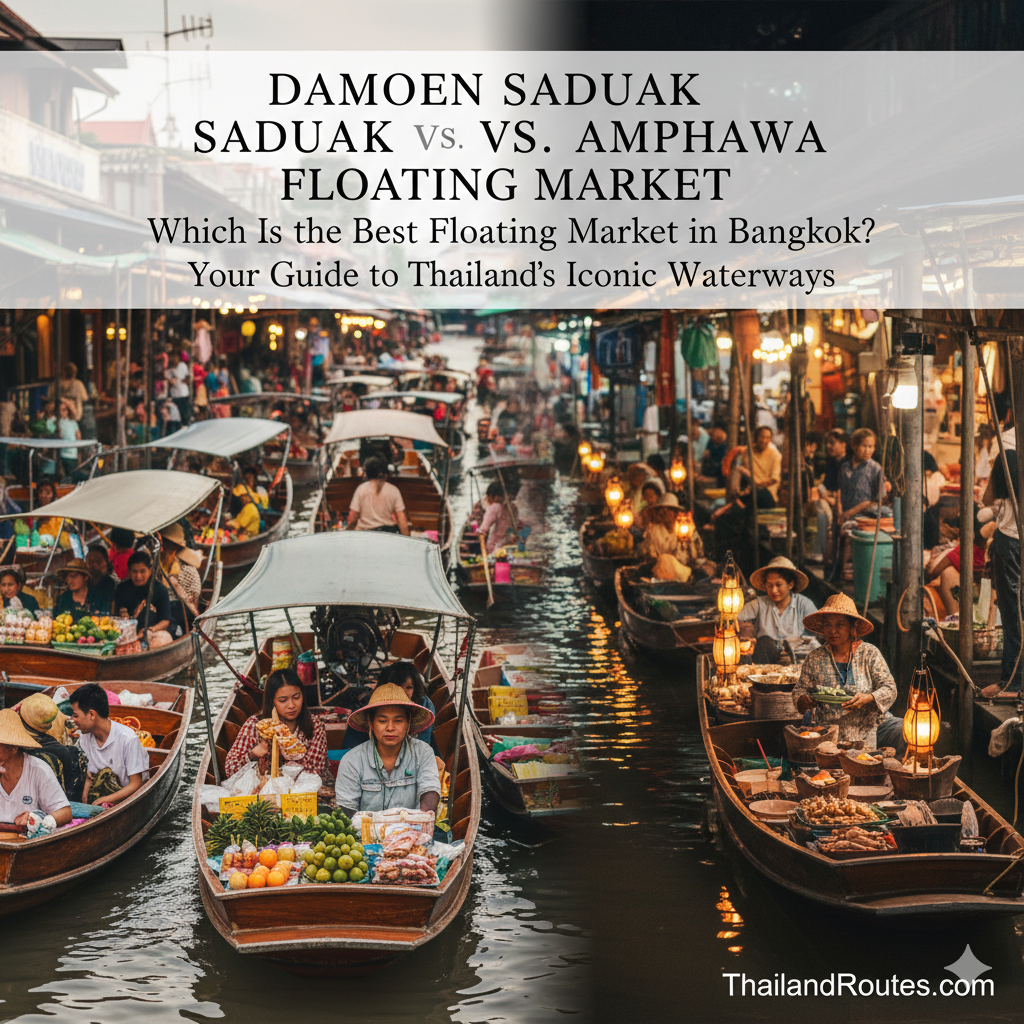
No trip to Bangkok is complete without experiencing a floating market. Wooden boats piled high with fresh fruit, sizzling Thai snacks cooked right on the water, merchants in wide-brimmed hats paddling along the canals—this is one of the most authentic and photogenic experiences in Thailand.
The floating market isn’t just a tourist attraction. It’s a centuries-old tradition, a living reminder of when Bangkok was known as the “Venice of the East,” built on canals and waterways rather than roads.
The two most famous floating markets near Bangkok are:
- Damnoen Saduak Floating Market – the most iconic and touristy.
- Amphawa Floating Market – more local and atmospheric.
Both have their unique charm, but they offer very different experiences. This 2500+ word guide will break down their differences—location, ambiance, crowd levels, prices, food, and overall vibe—so you can decide which floating market is best for your Bangkok adventure.
1. History of Floating Markets in Thailand
Before comparing the two markets, it’s worth understanding their cultural significance.
For centuries, Thailand’s waterways were its lifelines. Long before roads and cars, people traded and traveled by boat, especially in Bangkok and surrounding provinces. Farmers and merchants would paddle to markets to sell fresh produce, fish, flowers, and handmade goods.
Floating markets began as community hubs, not tourist attractions. Though modern development has changed their role, some markets still retain their original charm. Amphawa is one of those, while Damnoen Saduak has embraced a more touristic identity.
2. Overview of Damnoen Saduak Floating Market
2.1 Location and How to Get There
Damnoen Saduak is located about 100 km southwest of Bangkok in Ratchaburi Province.
Travel time:
- Car or minivan: 1.5–2 hours
- Organized tour: 2 hours (including pickup)
Getting there:
- Private car or taxi: Most convenient but more expensive.
- Group tours: Affordable and hassle-free.
- Public transportation: Doable but time-consuming.
Because of the distance, most visitors come early in the morning (around 7:00–9:00 AM) to catch the market at its liveliest.
2.2 Atmosphere and Experience
Damnoen Saduak is the most famous floating market in Thailand. That fame comes with a cost: it’s crowded and undeniably touristy.
What to expect:
- Dozens of boats selling souvenirs, fruit, noodles, and drinks.
- Vendors in traditional hats shouting over the water.
- Long-tail boats zipping through narrow canals.
- A fast-paced, chaotic energy.
This is the place to take postcard-perfect photos of the “classic floating market” scene.
2.3 What to Buy and Eat
Food is part of the magic here.
Popular street foods:
- Boat noodles served directly from floating kitchens.
- Mango sticky rice.
- Coconut ice cream in fresh coconut shells.
- Thai coffee brewed on small wooden boats.
Shopping:
- Souvenirs like hats, bags, silk scarves, handicrafts.
- Paintings and wooden carvings.
- Floating trinkets aimed at tourists (negotiate prices).
2.4 Costs
- Entrance fee: Free to walk around.
- Boat ride: Around 300–600 THB per person (shared) or 800–1200 THB (private).
- Food: 50–150 THB per dish.
It’s more expensive than local markets, but the photogenic value is high.
2.5 Pros and Cons
Pros:
- Most famous floating market in Thailand.
- Vibrant, lively, and photogenic.
- Easy to find organized tours.
Cons:
- Very touristy and crowded.
- Vendors may overcharge.
- Less “authentic” local atmosphere.
3. Overview of Amphawa Floating Market
3.1 Location and How to Get There
Amphawa is located in Samut Songkhram Province, around 80 km from Bangkok—closer than Damnoen Saduak.
Travel time:
- Car or taxi: 1.5 hours
- Train or minivan: 2 hours
- Ideal visit time: Late afternoon to evening (it’s a night market).
3.2 Atmosphere and Experience
Amphawa is popular among local Thais and feels more authentic. While tourists visit, the market still primarily serves Thai customers, giving it a much less commercialized vibe than Damnoen Saduak.
What to expect:
- Boats along a central canal, selling grilled seafood and desserts.
- Wooden walkways lined with local shops.
- A relaxed, social atmosphere rather than a chaotic one.
- Music and lanterns in the evening, giving it a magical touch.
Unlike Damnoen Saduak, Amphawa is best visited after 3:00 PM and peaks around sunset.
3.3 What to Buy and Eat
Amphawa is famous for seafood.
Top food highlights:
- Grilled prawns, squid, mussels, and crab.
- Thai desserts like khanom buang (crispy pancakes) and coconut pudding.
- Fresh fruit smoothies and iced drinks.
- Traditional coffee from local cafés.
Shopping:
- Handmade crafts and clothing.
- Local snacks to take home.
- Natural products and souvenirs at lower prices than Damnoen Saduak.
3.4 Costs
- Entrance fee: None.
- Boat ride: Around 50–100 THB per person for a shared boat.
- Seafood meals: 60–250 THB depending on size and type.
Amphawa is significantly cheaper and offers better value for food and souvenirs.
3.5 Pros and Cons
Pros:
- More local and authentic vibe.
- Cheaper food and shopping.
- Beautiful evening atmosphere with lanterns.
- Less aggressive sellers.
Cons:
- Smaller than Damnoen Saduak.
- Not ideal for early-morning itineraries.
- Less English spoken.
4. Damnoen Saduak vs. Amphawa: Head-to-Head Comparison
| Feature | Damnoen Saduak Floating Market | Amphawa Floating Market |
|---|---|---|
| Location | Ratchaburi Province (100 km from Bangkok) | Samut Songkhram (80 km from Bangkok) |
| Best Time to Visit | Morning (7:00–9:00 AM) | Afternoon & Evening (3:00–8:00 PM) |
| Crowds | High, mostly tourists | Mixed, mostly locals |
| Atmosphere | Lively, fast-paced, commercial | Relaxed, authentic, charming |
| Food | Good variety but pricier | Excellent seafood, more affordable |
| Boat Rides | Expensive, often tourist traps | Cheap, scenic evening rides |
| Photography | Classic floating market look | More intimate, romantic lighting |
| Cost | Higher overall | Lower overall |
| Accessibility | Easy with tours | Easy with minivan/train |
| Recommended For | First-time visitors, photographers | Culture seekers, food lovers, couples |
5. When to Choose Damnoen Saduak Floating Market
- You’re visiting Bangkok for the first time and want the classic “floating market” experience.
- You want iconic photos of boats and bustling canals.
- You don’t mind tourist crowds.
- You prefer a guided tour that takes care of logistics.
Best for:
- Photographers
- Families on short itineraries
- Group tours
Insider tip:
Visit very early (before 8:00 AM) to avoid the worst of the crowds and overpricing.
6. When to Choose Amphawa Floating Market
- You prefer local culture over tourist traps.
- You’re a food lover—especially seafood.
- You want to experience a floating market at night with a cozy atmosphere.
- You enjoy walking and exploring independently.
Best for:
- Couples
- Solo travelers
- Cultural travelers
- Budget-conscious visitors
Insider tip:
Combine Amphawa with nearby attractions like Maeklong Railway Market for a perfect half-day trip.
7. Combining Both Markets in One Day
Yes, it’s possible to visit both Damnoen Saduak and Amphawa in one day. Many travelers do this through organized day tours.
Suggested itinerary:
- Depart Bangkok early morning (around 6:00 AM).
- Visit Damnoen Saduak 7:30–10:00 AM.
- Continue to Amphawa for a late lunch and evening stroll.
- Return to Bangkok around 8:00 PM.
This option is great if you want to experience the energy of Damnoen and the authenticity of Amphawa without having to choose.
8. Tips for Visiting Floating Markets
- Bring cash: Cards are rarely accepted.
- Bargain politely: Vendors often quote higher prices to tourists.
- Dress lightly: It gets hot and humid, especially midday.
- Bring sunscreen and a hat.
- Avoid large bags: Boats can get cramped.
- Keep valuables safe: Crowds can make pickpocketing easier.
- Be respectful: These markets are working places, not just attractions.
9. Other Floating Markets Near Bangkok
If you’re looking for something less crowded than Damnoen or Amphawa, consider:
- Taling Chan Floating Market – Only 12 km from central Bangkok. Small, local, and easy to reach by taxi or bus.
- Bang Nam Phueng Floating Market – Known for eco-friendly vibes and food stalls.
These alternatives are perfect for travelers with limited time or those who want to avoid large crowds.
10. Real Traveler Scenarios
Example 1: First-Time Visitor with Limited Time
Maria visits Bangkok for 3 days. She joins a half-day tour to Damnoen Saduak to capture iconic floating market photos and enjoys a boat ride. She returns to the city in time for an evening rooftop drink.
Example 2: Food Lover and Culture Seeker
David prefers authentic experiences. He takes a minivan to Amphawa, walks along the canal, eats grilled seafood, and enjoys a sunset boat ride. He loves the relaxed vibe.
Example 3: Ultimate Floating Market Day
Jenna and Tom join a full-day trip: Damnoen Saduak in the morning for photos, Maeklong Railway Market at noon, and Amphawa in the evening for seafood and lantern-lit canals.
11. Accessibility and Transportation
To Damnoen Saduak
- Private taxi or Grab: 1500–2500 THB round trip.
- Minivan: Around 200–300 THB each way.
- Organized tours: 600–1200 THB including transportation and boat ride.
To Amphawa
- Minivan from Victory Monument or Southern Bus Terminal: 90–120 THB.
- Taxi: 1200–1800 THB round trip.
- Train: Scenic but slower option.
12. Safety and Etiquette at Floating Markets
- Be careful when stepping in or out of boats.
- Wear comfortable shoes with good grip.
- Don’t lean over the sides of boats.
- Ask before taking close-up photos of vendors.
- Respect local customs and avoid blocking pathways for selfies.
13. Budget Comparison
| Category | Damnoen Saduak | Amphawa |
|---|---|---|
| Transportation (round trip) | 600–2500 THB | 200–1800 THB |
| Boat ride | 300–1200 THB | 50–100 THB |
| Food per person | 200–400 THB | 100–250 THB |
| Souvenirs | Higher prices | Lower prices |
| Total (avg. budget) | 1000–3000 THB | 400–1500 THB |
Amphawa is clearly more budget-friendly.
14. Best Time to Visit Floating Markets
- Dry season (November to March): Best weather, less rain.
- Early morning at Damnoen Saduak to avoid crowds and heat.
- Late afternoon at Amphawa for sunset and cooler temperatures.
- Avoid weekends at Damnoen if possible (heaviest tourist traffic).
15. Insider Tips for a Better Experience
- Visit Damnoen Saduak on a weekday for fewer crowds.
- Plan Amphawa for Friday to Sunday, as it’s liveliest then.
- Consider private tours if you want flexibility and a better boat experience.
- Bring a reusable water bottle to stay hydrated.
- Combine markets with nearby attractions like Maeklong Railway Market for a full cultural day.
16. Environmental Considerations
Floating markets have faced criticism for increasing waste and pollution. As a traveler, you can help:
- Refuse plastic bags when not needed.
- Use reusable bottles or cups.
- Avoid buying cheap trinkets that end up as waste.
- Support local vendors rather than mass-produced souvenir stands.
17. Photography Tips
- Early morning at Damnoen Saduak offers perfect light and fewer people.
- Golden hour at Amphawa creates stunning reflections on the water.
- Wide-angle lenses work best for capturing the market layout.
- Ask before photographing individual vendors.
18. Language and Communication
- Most vendors at Damnoen Saduak speak basic English.
- At Amphawa, English is less common, but pointing, smiling, and basic Thai words work fine.
- Learning a few Thai phrases like “Tao rai?” (How much?) makes the experience smoother.
19. Cultural Significance
Floating markets aren’t just places to eat and shop—they’re a living piece of Thailand’s heritage. Amphawa, in particular, still functions as a community hub where locals gather to eat, trade, and socialize.
Supporting these markets responsibly means helping preserve this cultural tradition for future generations.
20. Final Verdict: Damnoen Saduak vs. Amphawa
Both floating markets offer unique experiences.
- Damnoen Saduak: Best for first-time visitors, iconic photos, and those who prefer tours with everything organized.
- Amphawa: Best for authentic local vibes, great food, lower prices, and a relaxed evening experience.
| Category | Damnoen Saduak | Amphawa |
|---|---|---|
| Atmosphere | Tourist-heavy, lively | Local, charming, relaxed |
| Best time | Morning | Afternoon and evening |
| Cost | Higher | More affordable |
| Experience | Classic floating market | Authentic and less crowded |
| Photography | Iconic, postcard-perfect | Romantic, lantern-lit sunset |
If it’s your first trip to Thailand: go to Damnoen Saduak for the classic experience.
If you want something more local and cultural: Amphawa is the better choice.
And if you can—visit both.
Conclusion
Floating markets are a window into Thailand’s past, offering travelers a unique way to experience its culture, flavors, and atmosphere.
- Damnoen Saduak Floating Market is the most famous—chaotic, colorful, and perfect for classic photos.
- Amphawa Floating Market is the most authentic—cozy, romantic, and perfect for food lovers.
Whether you’re after postcard images or local flavors, Bangkok’s floating markets offer a timeless charm that continues to enchant travelers year after year.
Whichever market you choose, the sight of boats gently gliding down the canal, the smell of sizzling street food, and the warm smiles of vendors will stay with you long after your trip ends.
Leave a Reply